.avif)
Referral systems are broken, but Greg Mason and SilverAssist are determined to change that. Listen to find out how.
We’re not just trying to push leads. We’re trying to push qualified families that match the capabilities of communities.
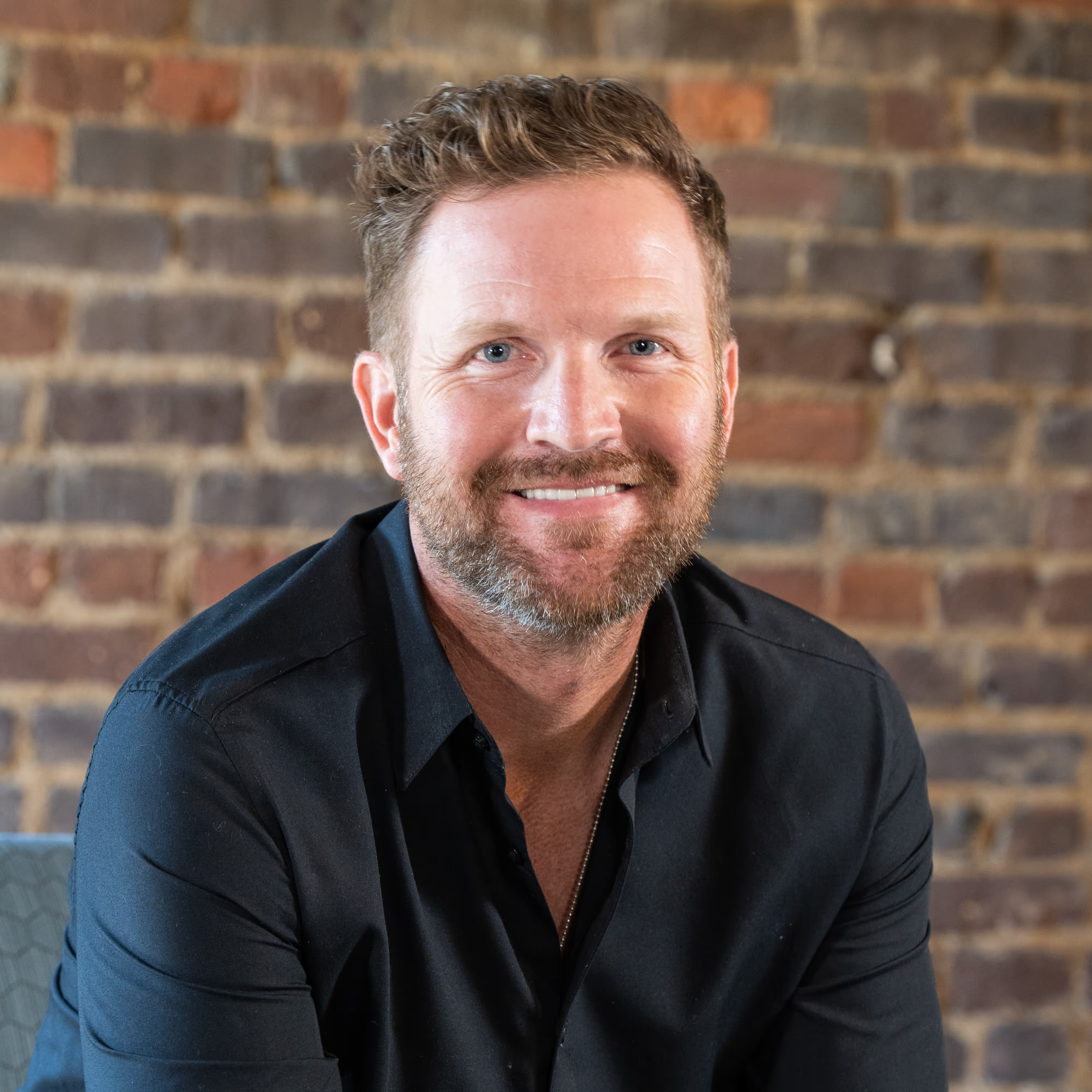
Josh Crisp is a senior living executive with more than 15 years of experience in development, construction, and management of senior living communities across the southeast.
Learn More ▶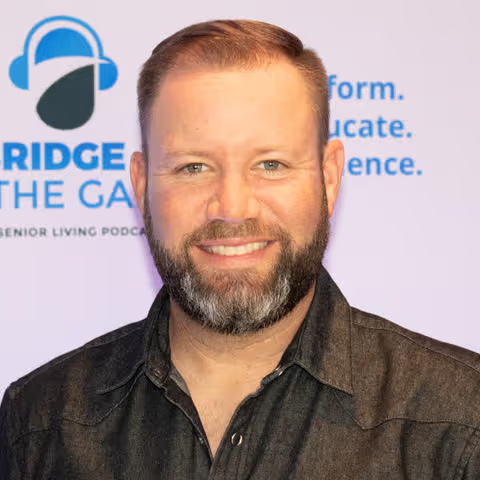
Lucas McCurdy is the founder of The Bridge Group Construction based in Dallas, Texas. Widely known as “The Senior Living Fan”.
Learn More ▶.png)
There's no one until now that's been able to put together the collection of high-end, high-quality placement advisory capabilities with financial and ancillary services in an integrated way
The senior living referral system is at an inflection point, and Greg Mason of SilverAssist believes it’s time for a fundamental shift. In this episode of Bridge the Gap, Greg shares the vision behind SilverAssist’s acquisition of Caring.com and how the move expands their digital reach while transforming how families experience the transition into senior living. If you’re an operator frustrated with legacy referral models, or a professional navigating care transitions, this episode offers a compelling look at what’s next.
Key Topics Covered
Meet the Hosts:
Connect with Our Guest
Learn more about SilverAssist:
Produced by Grit and Gravel Marketing.
Become a sponsor of Bridge the Gap.







00:55 - 04:27
Lucas McCurdy
Bridge the gap in three two. Welcome to Bridge the Gap podcast, the senior Living podcast with Josh and Lucas, an exciting guest on today. We want to welcome Greg Mason from SilverAssist. Welcome to the show.
Greg Mason
Thanks for having me, Lucas. Nice to be here.
Lucas McCurdy
There's been a, real major release on, y'all's announcement, and we're going to dive into that today. Can you fill us in on the big announcement and what the reaction has been?
Greg Mason
We announced that we acquired Caring.com, which, you know, has, is a big legacy brand in the industry. Big referral partner. We closed on the transaction in early January. So it's just been over a month now, so it's, you would expect me to say it's it's gone. It's gone. Well, integrations are never easy. But I think what's been most heartening is just been the reaction from the industry, from our community partners. Internally, I think there is, genuine excitement about, our bringing caring under our umbrella and unifying it with our, you know, collective, you know, a collection of assets, that, you know, encompasses, you know, both our digital offerings, but also a way to senior advisors are our franchise network where we can really localize digital leads.
And then also of course, Elder Life Financial, our financial services portfolio and other ancillary services that come along with that.
Josh Crisp
You mentioned sort of this umbrella of not only your your partners, but I mean, I think it's been almost, a month now since the announcement, which is hard to believe. Time's flying already this year. Big announcement for you guys. But what's been the general response that you're getting from not just your partners, but from the industry as a whole?
Greg Mason
There's actually a fair bit of dissatisfaction with referral partners. I would say, you know, across across the industry. And some of that has to do with, the legacy of the digital aggregators. Right. And so I won't name names, but there's one big one out there. I think we know who they are that, you know, cast a pretty long shadow on the industry. And, it's very, it's very much a call center-led approach as opposed to a family-led approach. And so I think, I think based on that, the industry is very excited about there being a multi-service, counter counterweight really to, to that long shadow.
And, you know, when you really step back and look at the history of referral partners in this, in this, in this marketplace, there's no one until now that's been able to put together the collection of, you know, high, high-end, high-quality placement advisory capabilities with financial and ancillary services in an integrated way. And I think I think the market is like that's what they're super excited about. And that, you know, naturally that we're doing this on a national basis is not just, you know, occurring in one market, but we can do this across the country.
04:27 - 07:30
Josh Crisp
A lot of people, I guess, that are in the industry have been around for a while, have seen candidly caring, struggle. Perhaps maybe that's too strong of a word, but there's definitely some challenges there, right?
Greg Mason
I mean, for you, it was SilverAssist. What opportunity did you really see there when other people were seeing struggle? We saw it as an opportunity to expand our digital footprint first and foremost. So Caring is a big brand. And it captures a lot of referrals. Now, what they do with those referrals, I think, leaves something to be desired.
Right? So, you know, we think there's a lot of improvement with respect to how they can and under our direction will be changing how they're interfacing with families and in turn, how they're handing them off to, to community partners. And we have a lot of changes underway to sort of, sort of drive that, that evolution.
But, you know, we were first and foremost really excited, not just about caring, but the total brand portfolio. So it it more than doubled our digital reach, as a company. And so consequently, it gives us a chance to interface with, you know, more families who have the need for the services that the important services that were being offered.
And so, what's really different, though, about how we go forward is, is obviously in terms or maybe not obvious, but in terms of how we, how we combine this idea of, sort of satisfying someone's interest or need when they begin their search on the internet, but our ability to perhaps interface with them Telephonically but to hand those families off to a local advisor through the voices you know, franchise network, I think it just completely changes the consumer experience, the family experience in a material way that represents a real transformation for how the industry perhaps has thought of referral partners.
But, you know, in our case, you know, it's really what's driving our mindset here. And so long answer to your question. But caring gives us more expanded capability to reach families and ultimately to hand off more of those to drive this really white-gloves local experience, which we think is so, you know, so critical in the evolution of the industry and how, you know, the industry may have thought of referral partners, you know, over the past ten yearsish. And, so that's that's the that's a path.
Lucas McCurdy
Well, industry referral partners have I think the biggest challenge is that they've just been seen as transactional, which is not a great experience. And it sounds like your, your thoughts and y'all's approach is to make it much more relational. Driven is that your approach and how do you think, you're going to be able to, to, bridge the gap there?
07:30 - 15:13
Greg Mason
100% And I think, I think there's like there's way too much, the vernacular is leads and lead credit and move ins as opposed to, families in need. Right. You know, we're trying to make, make a, the appropriate connection between mom or dad, sort of need and matching their ADLs, and their health care needs with the, the service offerings of the various your communities that they have as, as options overall.
And so we've got to get beyond this sort of numbers mindset that the call center mentality has sort of driven in the industry. And, you know, we intend to do that just through, you know, fundamental good old fashioned, you know, maximizing the customer experience and innovating around the around the customer, you know, as opposed to just, you know, you know, capturing referral on the internet, passing it through a call center.
We want to make sure we're asking all the right questions. We really understand what the what the situation of the senior is, and we're asking enough questions in such a way that we can provide a high level, consultative, you know, service that is not only about their their senior housing needs, but also their funding needs and options and, other ancillary, you know, services that surround that inflection point for the family.
You know, that's this is an inflection point when someone makes the decision, family makes the decision that mom or dad is it needs them, needs to make the transition to congregate living. It just it spawns a whole variety of needs, not solely. What's the best community for me? But a variety of other questions. And that's and we hope to really super serve that inflection point, you know, on behalf of the family, not just in helping them, you know, make the best choice around their congregate living solution, but also solutions that that surround that as well. And to ease the process, the tension, the stress that comes upon the entire family. During this process,
Josh Crisp
Greg, it can be and is a very complex decision and it's complex to navigate for the family. It can also be really frustrating for operators, for managers and administrators to work oftentimes with a referral partner. That's why you guys are obviously wanting to redefine that. But when you look at Caring.com and combining that acquisition with, as you mentioned, this umbrella of services that is these referral partners at the local level with financial support at the local level. What do you see is that direct impact to the marketplace?
Greg Mason
The direct impact is just a it's a much more meaningful experience with very clean, warm handoffs between experts in the field. So yes, you know, we will continue to be in the business at least digitally with respect to were intercepting families when they inevitably, you know, spend time on the internet to answer their questions. You know, families are prepared for this phase of life as we know. And so there are a lot of questions they ask. It's not just an immediate, geez, what's the best assisted living community for mom today kind of thing?
There's a whole array of questions that they would otherwise, request in that regard. But, you know, once you interface the family, you really strive to try to understand their needs. You try to understand where they are geographically, what their health care needs are. And these are relatively deep consultations. They're not just one off, you know, ask for questions, you know, flip the lead to a community, and call on a qualified family.
This is about asking relatively deep questions, collecting that information, handing that information off, and making a warm introduction to a local advisor who is very ingrained in the local senior living community and ecosystem. You know, they really understand, you know, what communities are good at, what they're less good at, what their particular skills are, what the cultures are like, that sort of thing.
You can only garner that kind of nuanced information, you know, if you are local. Right. And so from that standpoint, were, you know, taking advantage of, of the web to, begin to address a family's needs at a very urgent time when there's when there's, you know, a very high degree of interest and urgency in terms of getting answers to their questions as quickly as possible and beginning to identify solutions.
But to be able to hand that off to, a local advisor who brings, you know, the ability to meet with the family in person, you know, that's a big deal, right? In this space. And to really go deep on the needs of mom or dad to really try to fine-tune what the solutions might be, that's a really big deal.
And then through that process, of course, you know, we get to know the family and we start to understand what other needs might surround, the, the housing needs specifically. And, and this is where you naturally get into the conversation where, oh, dad was a veteran. Did you know that you have, you know, potentially could be leveraging aid in attendance benefits?
Or you'll find out that, you know, you know, really the way we're going to have to, you know, fund the cost of care is by, you know, selling mom or dad's home. Well, that spawns a whole new process that were equipped to help the family with as well. And, you know, a variety of other, you know, things, estate planning related things.
And, so you just, you start to get a sense that our ability to really connect and serve the family at a meaningful, personal and local level is is quite profound. Vis-a-vis the historical legacy referral model, which, again, has been kind of dominated by this call center, you know, sort of approach that is a lot less personal and a lot more about the lead and getting lead credit and those kinds of things.
So I understand why the when many of the community operators have, you know, the there's some disenchantment has, has emerged as a result of that. And and it's interesting to me, you know, not being a 20 year vet of the industry, being a five year vet of the industry is that the industry didn't evolve more quickly.
But, you know, we're catching up fast in terms of what we're trying to do. It's silver or SilverAssist to change that fundamental dynamic, which we think is a substantially better, experience, both for families but also in terms of the development of our our community relationships as well.
15:13 - 24:32
Lucas McCurdy
I can tell, you know, this, this placement is really a mixture of art and science and deep understanding and experience, which is so clear, speaking to you that you you've really got a good grasp on this.
Greg Mason
And I think that that's probably what makes the difference here. What does SilverAssist doing differently that really sets you apart from how families experience the actual transition? The two big things that, you know, separate what we're doing. One is this digital local connection. I mean, that's the we we've sort of our future is is based on on this combined, you know, capability.
And it's going to it's going to result in, you know, a much better experience for the, for the family, but also for the communities. What we're trying to do is we're not just, we're not just trying to push leads. We're trying to push, qualified families that that, that match the capabilities of communities. So in that regard, call qualified sounds more clinical, but it's really like we're trying to pre-qualify families and understand their needs on a deep enough level that the recommendations that we're making in communities that they should consider is based on the knowledge that we have of the communities themselves.
Right. And so, consequently, communities can expect, you know, higher quality referrals, you know, coming from us on a go forward basis. Moreover, our ability then to answer the fundamental financial service related questions or the financial needs of the family, not only are we, you know, finding a right match between, you know, the ADL needs of the families that align with the with the capabilities and the services offered by the communities, but also.
Okay, well, how's the family going to afford to, you know, to cover the cost of rent and care, you know, for the foreseeable future? You know, for mom and dad and the family, you know, fully prepared for that. Most families are not they are, faced with oftentimes sticker shock with how expensive room and care can be in families, you know, just as they really haven't planned for this phase of life.
They certainly haven't planned for the financial, you know, requirements, of assisted living. And so, you know, Elder Life Financial is purpose built to help families develop their financial plan. And we have a series of proprietary and partner services that we can bring to bear to help families in that regard. But it starts with a financial consultation to really understand what their situation is, but also to educate them on what their options are, you know, to pay for senior care.
And there are often there are often, you know, options they have that it that they didn't know they had. And, we can often help them in that regard as well. And so that, that, that interchange, that alone is a big step up, you know, from what there is no other referral partner in the industry that's delivering that form of integrated, you know, service offering.
And I don't I don't say that in a braggadocio way. It's just it's just fact. And, and we hope to build upon that because we're having a lot of success, you know, with the approach. And, it's not rocket science, you know, to me. And it's like, it's it's pretty simple when you really step back and think about, you know, where the families at and the various kinds of needs that they may have.
And we're just really trying to follow our nose and super serve those needs, as we go. Greg, obviously, the broken referral system, you guys are seeking to sort of redefine that. You've also, talked about how you guys are different. The industry is obviously changing as well. It's rapid transformation in general. You touched on some of the challenges of not only how families navigate to find the right solution, but you just touched on the cost and how they pay for it. And potentially some of those solutions.
Josh Crisp
Obviously, you guys are visionaries. You're a visionary. How do you see specifically this future being shaped, for families as they seek to, to find a solution to pay for that solution for care and housing? Where do you guys fit in in the long term of helping to shape that?
Greg Mason
We have a big role to play with respect to, the the experience, the holistic experience for the family and shaping that holistic experience. I mean, our, our, our long term vision is really to be known as the leading senior advisory, you know, service for for families going through this phase of life where currently we're very episodic as a company from the standpoint of, you know, that transition of congregate living. However, we speak with a lot of families who, aren't quite ready for congregate living as well.
And so many of our services also extend into that earlier phase of the senior care transition, if you will, where by which, you know, mom or dad may not have a need or be ready for one reason or another to consider congregate living, but they definitely have needs for support in the home. And so over time, we fully anticipate moving from a more episodic kind of approach to a more horizontal kind of an offering in such a way that we can develop relationships with families like earlier in that phase of life, or for which, you know, mom and or dad, you know, are beginning to utilize, external services to help them with, you know,
with the needs of daily living, and that sort of thing. And so, you know, our long term vision, is, is more expansive than what we're even currently, delivering today. In fact, in the next couple of months will be making up an announcement, in this regard, just to demonstrate how this is, this is going to begin to further transform, you know, what we're doing, in the in the industry, in my humble opinion, the, the digital aggregator model, we're we're at an inflection point for the industry with respect to that relationship with digital aggregators, largely because, communities have gotten more sophisticated on their own with respect to marketing, you know, both in terms of generating their own family referrals, but moreover, recognizing that, you know, this pipeline led approach, this lead led approach is just it's driving a lot of numbers, but it's not driving a lot of quality. And, so I think there's, we're really held that, you know, as a company to sort of say, hey, you know, you know, we we want to be that preferred referral partner in such a way that, you know, we're making a commitment to you.
We're not just pushing you leads or pushing, qualified family referrals. And here's a lot of, data and information about this family, that we're willing to provide to you that can help you have a more informed, conversation, you know, with the family from the outset and such. And, you know, so I think that there's a big there's a big change that we're trying to drive, you know, not just with the family. That's first and foremost. However, also with respect to the, the, the service offering that we can deliver to community partners as well, because there's a, as we've discussed, there's a big data, big satisfaction with the legacy approaches. And, and so we're we're thinking long and hard about that as well, and, working very hard to sort of enhance that, that service offering that we can deliver communities.
Josh Crisp
I'll tell you, our listeners, especially those that our community partners or that work, with families in communities, when you were making that last point, Greg, they all just, I heard them lean in and start listening a little bit more because that's so important, to everyone that's trying to work with these families to get them, the proper resources and communities.
Lucas, what a great show with a great friend. And Greg and SilverAssist, thanks for your time today, Greg.
Greg Mason
Thank you both. I appreciate it.
Lucas McCurdy
And to all of our listeners, you can connect with Greg and SilverAssist there in the show notes. Hit those links. Go to BTG voice.com to download this content and so much more. Thanks for listening to another great episode of Bridge the Gap.


