
Joe Pohlen of Cardinal Senior Living joins the show for a conversation about long-term ownership, responsible growth, and putting residents first.
If we're doing what's in the best interest of our residents, it will translate into what's in the best interest of our business.
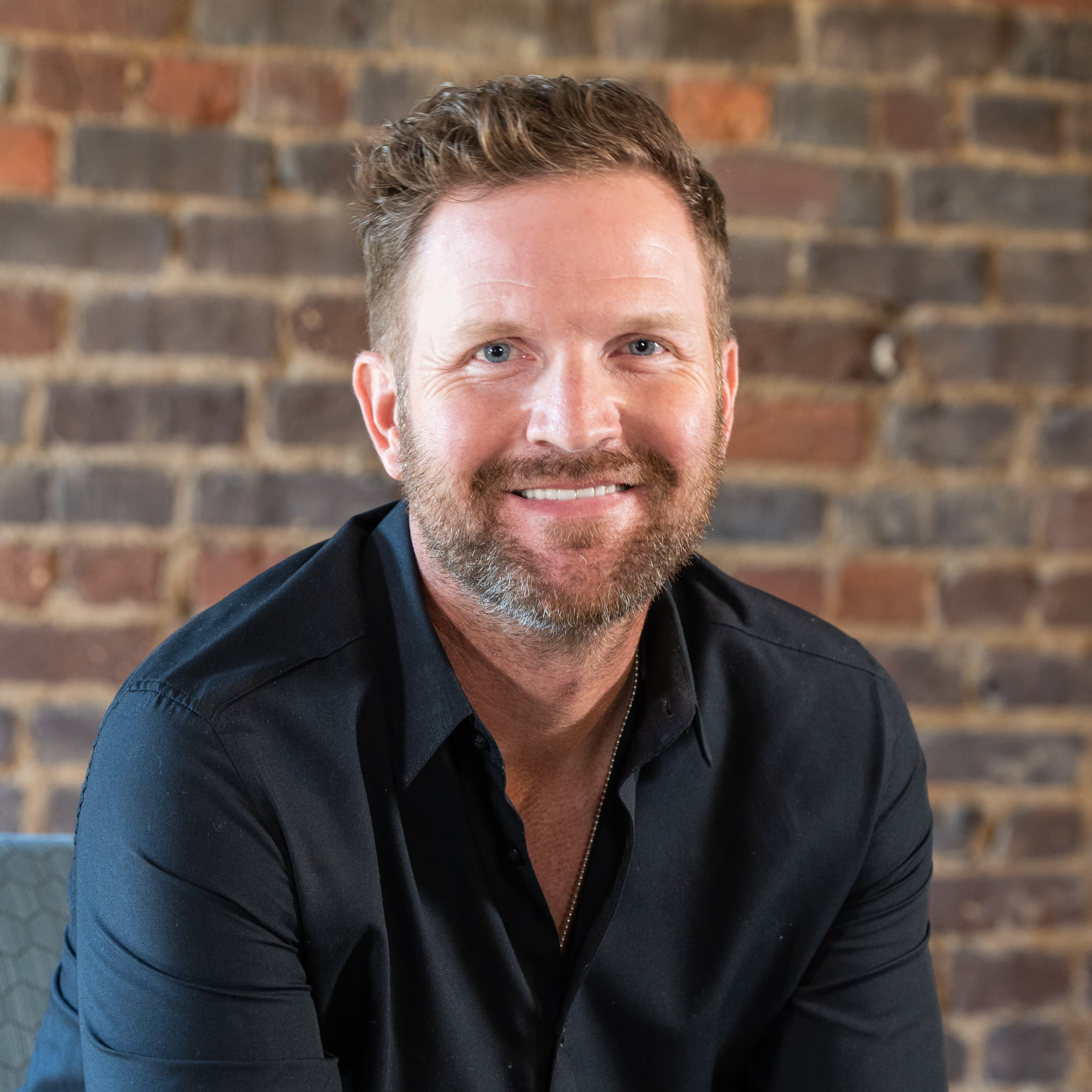
Josh Crisp is a senior living executive with more than 15 years of experience in development, construction, and management of senior living communities across the southeast.
Learn More ▶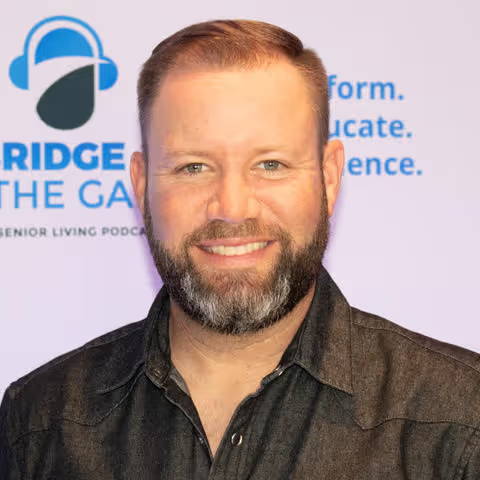
Lucas McCurdy is the founder of The Bridge Group Construction based in Dallas, Texas. Widely known as “The Senior Living Fan”.
Learn More ▶
I personally feel like the judge of a society is how well we take care of those who can't take care of themselves.
As senior living operators navigate growing demand and pressure to expand, long-term ownership is becoming an increasingly important conversation. In this episode of Bridge the Gap, Josh Crisp and Lucas McCurdy sit down with Joe Pohlen, CEO and Co-Founder of Cardinal Senior Living, during the NIC conference in Chicago.
Joe shares his journey from self-storage and student housing into senior living, including a powerful memory care experience that changed his perspective on the industry. The conversation explores why long-term family capital creates stability for residents and staff, the risks of rapid expansion and excessive debt, and the growing opportunity in independent living cottages. Joe also explains why senior living communities should be treated as people's homes rather than as assets to be traded.
Key Topics
Building Cardinal Senior Living from two leased communities into a multistate organization.
Why long-term family capital can create stability for residents, employees, and operators.
How patient ownership supports leadership development, recruitment, and community improvements.
The dangers of treating senior living communities like transactional real estate assets.
Independent living cottages and opportunities for expanding senior housing options.
How hands-on memory care experience shaped Joe's approach to senior living.
Avoiding excessive debt, overexpansion, and unsustainable growth.
Developing the next generation of senior living leaders through the NIC Future Leaders Council.
Why meaningful caregiver-resident relationships should remain at the center of the business.
Meet the Hosts:
Connect with Our Guest
Produced by Grit and Gravel Marketing.
Become a sponsor of Bridge the Gap.








00:52 - 04:57
Lucas McCurdy
Bridge the gap in three two. Welcome to Bridge the Gap Podcast, a senior living podcast with Josh and Lucas on an exciting day here in Chicago. Beautiful weather, loving being outside here by the river. We got a good view and great guest. Want to welcome Joe Pohlen, Cardinal Senior Living. Welcome to the show.
Joe Pohlen
Thanks for having me guys.
Lucas McCurdy
Very excited to see you. We have connected from the NIC FLC Future Leaders Council, which you are currently on and it's been a fun journey. You have an incredible origin story, and I find you to be quite witty and and you have just a great outlook on the industry. Walk us through how you got started. I think it was because no one else would hire you.
Joe Pohlen
That's part of it. I was originally in self storage and student housing and wanted to be in be able to find something I could use my real estate experience and have control over the NY. Always dream to owning my own business and, met up with my partner Chuck gray.
He had worked at holiday Retirement and had done a little, management company before that, had done senior and, we started Cardinal with two leases out in Pennsylvania, where we were just a management company. Have grown that business. Since 2015. And now, we operate 21 locations in Michigan, Ohio and Pennsylvania, 11 of which we own.
Fantastic. So that was a quick summary. Can you fill in can you bridge the gap a little bit? Because 21 buildings in that short amount of time, that's not an easy fee. Yeah. So we did a the traditional management company route where we would lease a building and did really well there. We kind of went after buildings that struggled with occupancy, built our company on really a we unapologetically sales and marketing focused operator.
But unfortunately, we were kind of victims of our success where the capital partner, saw how well we did and increased the NY and ultimately sold the buildings. So we we're kind of in a situation which I see a lot of operators in, which is you get a check, but you're out of work there. So we spent a lot of time trying to find the right capital partner for us going forward.
Ultimately got connected with a family office. Out of Latin America, actually. And they, now own 70% of Cardinal. And my partner and I own the other 30%. And we've just been growing, responsibly with, you know, 1 to 3 deals a year and we'll buy 50% debt, 50% equity, and try to buy great buildings and and run them well.
Lucas McCurdy
Josh, that brings up a really good point. Because right now everybody's trying to find the right partners and there's a lot of talks on rights and also private equity. Joe, you've taken a different path. Are you pursuing those paths as well, or is this more in your in your fit?
Joe Pohlen
I think the best fit for us and for our residents is is long term capital. Who thinks in generations it's senior housing really started as a family business. I think, these families are the best owners of senior living where we talk in years and generations. We don't talk in quarters or months there. I like our joint governance structure, which my partner and I have there. So we aren't going to be victims of our own success if, if the buildings do really well, they aren't going to get sold.
Josh Crisp
Well, I mean, break that down a little bit more because I think there's there's some there's definitely some things that when you have a long term outlook, that probably changes a lot of your short term strategy. Right. And some of your short term decisions. And how do you approach like what? What does that impact as far as what decisions are you making differently now related to team or community or strategy? When you have a much longer outlook on where you're going to be?
04:57 - 08:45
Joe Pohlen
I think when you have a when you're thinking in generations. It's a lot easier to invest in your staff to build people up in the pipeline of who could be an executive director maybe five years from now, six years from now. Before they get that job, I think it also shows up on the on the capital side and taking care of your buildings.
You can put strategic plans together. Where, hey, we're going to start setting money aside, and we're going to do this building in three years and have a comprehensive plan. It also has, which I, I've been shocked by. It's really helped with recruiting. There's a lot of people on the levels, the regional levels and the executive director levels who've been burned by a transition where they're building sell and they transition to a new owner operator, and they have the scars from all of that.
And when we can present to them that we have a long term focus, we have a capital stack that's in it for generations. We've been able to recruit a lot of really talented people who just want to take care of the residents. They don't want to be, you know, trading hands and selling every 3 to 5 years.
We operate in the Midwest and, you know, Michigan, Ohio, Pennsylvania. We do high end private pay communities and a lot of those residents so that we that we care for have been business owners or related to business owners, and they kind of understand how business works. And I think one of the big issues that we have in our industry is we kind of talk down to residents, these residents that that we care for.
When they spoke, people wrote down what they said. These are kind of the people who've built our communities, and they understand what it means to be owned by a private equity company. They understand what it means to be owned by a a publicly traded company. And they like that the community that they live in is owned by a family.
And it's a very simple it's a very simple business. It's not an easy business. But if we can care for you long term, build the staff and and your cared for well, like you'll pay a premium and you'll live there and and be happy and healthy and, you know that's the business.
Josh Crisp
So a funny quote. I saw and some of your notes was, the danger of treating communities like Pokemon cards. Explain what in the heck that means.
Joe Pohlen
Yeah. So when I go to the industry conference, you know, or come to NIC, you know, and I, I did the intro of this thing, it's, you know, everyone's like, you are kind of how many buildings you have. And it's a very transactional. And I think what ends up happening is, these communities where people live, promises have been made to these families about, staffing levels and activities and these programs that our industry, unfortunately kind of trades, these like Pokemon cards where, you know, buildings are kind of talking about as widgets and like, these are people's homes.
And I, I understand that that's our industry, that that we are. But I don't think that's ultimately in the best interest of our residents. And if we're doing what's in the best interest of our residents, it will translate into what's in the best interest of our business.
Josh Crisp
So every everyone is talking and excited in our industry about the tailwinds, about the demographics, the huge opportunity we have as operators, as owners, as industry professionals to meet the, the huge, demographic needs for care as they're aging. With you guys, what are you doing strategically to position on a real estate side from an operating side to, to be able to care for that population? Is there a certain sector you're looking at, or certain type of care, certain continuum of care that you're focused on?
Joe Pohlen
What we are most excited about right now are IL cottages, next to AL, memory care communities.
08:45 - 13:22
Joe Pohlen
I think we've seen in our portfolio, the IL cottages are really high demand and people really like those. And ultimately when we were as a family looking for a place for my grandmother, you know, that's what we ultimately decided. And, so we're really excited about the about the cottage model attached to an existing building.
Josh Crisp
Do you think, is that an opportunity where you have a lot of existing assets that you're adding the cottages to, or is this ground up development where it's more of a master plan that you're putting that together or both?
Joe Pohlen
So we tried one development one time and got the scars to prove it. It's an incredibly different thing than operating a senior living building. So we are not developers and aren't doing development. That being said, we are looking at adding cottages around some of our buildings.
Josh Crisp
It seems to be an extremely popular model. So what is some experiences in your life, maybe prior to senior living or on that shaped you and, and kind of molded you into doing what you're doing today?
Joe Pohlen
So I originally was in self-storage and student housing and wanted to get into senior, really just from a financial perspective. And asked around everyone I knew, like, oh, can you teach me about senior? Can you teach me about senior? And ran into an old retired nurse who was taking care of memory care residents in her house, and she was like, I'll, I'll teach you about senior.
I'm like, okay, so your shift starts at 7 a.m. on Saturday. And I was like, okay, so I show up, I have this cashmere sweater and these dress boots and, you know, I have all my spreadsheets. And I thought she was gonna, like, walk me through kind of how to underwrite these and, and how to do it. And when I showed up, she put me on showers, and I gave eight showers that first morning to the to memory care residents.
And, I mean, I got beat up by one of the residents. And I mean, it was she was having a ball with it, some finance guy just in there trying to give showers. And I was like, why does anyone do this for a living? This is like, this is incredibly difficult. It's dangerous and it's hard. And, we finally got a break in the woman who had, like, hit me.
She looked over it, and she had Down Syndrome, looked over, and was like, I love you. And it it's so stunned me. And I'm like, you do not get I love you in self-storage like you do not get. I love you in in student housing. And it kind of like clicked of like, oh my. Like this is why people do this.
And you know, from that day on all the, you know, it's cardinal over. Bathrooms have heat lamps in them because, you know, if you have three people giving someone a shower, like the bathroom doesn't look like a regular shower you would see in your house. And I think back to that quite a bit. You know, that experience and and what you don't see in that interaction is anything to do with construction or anything with accounting or HR, any of the other things I spend most of my day, you know, worrying about.
But ultimately, if we can facilitate that relationship between the caregiver and the resident, and that's the kind of cornerstone of what we're building. I think that's, that's the right direction.
Josh Crisp
You're in a unique position. You got a lot of experience under your belt, a lot of communities under your belt as an owner, operator, Future Leaders Council, you're hearing about seeing firsthand the emerging not only opportunities, but big challenges we have ahead as an industry. What are like maybe the top challenge that you see for owner-operators in the years ahead, and kind of how you're positioning your company to tackle that challenge?
Joe Pohlen
High level biggest challenges are industry, I think are going to be putting too much debt on the buildings, getting getting too big too quickly. I think it's something we think a lot about. If we look at what is caused businesses like ours to fail in the past. I think it is a good roadmap of what to be wary about going forward in the future. And what I think that in issue we've seen in senior housing is operators like us have had some success. They think they're good at everything, get too big too quickly or take on too much debt.
So I think those are kind of like the biggest fear factors. I feel responsible for the company taking, you know, to take care of, you know, we have other people, you know, a cardinal who are dealing with other things that they're worried about. But I feel like that's my role right now at Cardinal is making sure we don't get out over our skis.
13:22 - 17:53
Josh Crisp
Lucas, a lot to talk about, you know, with owner operators, family owned future leader. Where do where do we stop, you know?
Lucas McCurdy
Well, Joe, I would like to talk about future leaders a little bit because, at the spring meeting, there was a talk about, you know, how to how does the that organization, that council let other potential future leaders just there's a lot of new people in the business that are coming in.
How do they let them know that this is an opportunity? What is your experience been like? And do you what would be your encouragement for people to look at the Future Leaders Council as an option?
Joe Pohlen
Yeah. So I've I'm a year three of FLC and just blown away by the quality of the individuals. The selection committee puts in a tremendous amount of work. And I got to see it firsthand of, not only vetting the professional credentials, but like the actual human credentials of the people in FLC. It was a little nervous. The first year didn't kind of felt like drinking out of a fire hose with all the things NIC is involved in and all the volunteer stuff that, you're volunteered to do on FLC.
So I would encourage people who might be new to the industry to maybe make that a goal of something that they would want to do. It's it's been my favorite thing I've ever done that, NIC. Well, and you know, as a non FLC member, you got alumni here and active, it seems like you said a pretty rigorous process.
Josh Crisp
And, you know, I've always been just so impressed when that list comes out. The the people, as you said, not only their professional experience but just these people like great, great people. And I, I have heard just a little bit, I mean, you guys work all year round. I think your average NIC goer doesn't realize how much time FLC puts into things behind the scenes for not only for NIC, but for our industry. Right?
Joe Pohlen
Yeah, there's a lot of volunteering. There's a lot of committees you're on. And, you know, all of us are busy. All of us have, you know, day jobs that we're that we're working through. And, the volunteer work that, that that group is doing is really impressive, for the industry. And I'm seeing a lot of it, selflessly, people being on committees and doing things that don't personally impact them or lead to their own pocketbooks getting bigger, are really doing it for the industry. And I feel people at NIC that I've interacted with are doing things for the right reasons.
Josh Crisp
Well, you know, a huge thank you. On behalf of our audience and our listeners, you know, I'll be the thank you to say thank you both for putting in that extra time, you both business owners. So I know firsthand how busy that world is and to take that much time out to do something completely voluntary to help this industry event, this, this group, but also our industry just be better, I think means a lot.
And I think that speaks to the type of caliber of people that, are attracted to our industry for the right reasons that you touched on earlier and shape the future of aging services for our country, really. And and it's it's such a huge mission and opportunity. So thanks for what you do. And thanks for spending time with us on a busy Wednesday at NIC.
Joe Pohlen
Well, I appreciate you guys. Also, what you've done for the industry and putting out the podcast. I know how much work goes into all the behind-the-scenes and prep and guests and calendars and, and you have day jobs and and taking time out to, you know, do this for the industries really important. I, I, I personally feel like the judge of a society is how well we take care of those who can't take care of themselves. Or, and, you know, that's what our industry does. And I think for us to do a good job. Really matters, like on the macro level of the kind of society we want to live in. And it does require you to do things that give back to other people.
Josh Crisp
Such a great episode. Look forward to connecting all of our listeners that I know you're you're very active. I've noticed you for years on LinkedIn and. But for those that may not be connected. Great opportunity to learn from one of the industry's best. That's doing it for the right reason. Lucas. Been a great show.
Joe Pohlen
It has been. Joe, thank you so much for your time today. Really appreciate it.
Joe Pohlen
Thanks, guys.
Lucas McCurdy
All right. To our listeners, you can go to BTGVoice.com and download this content so much more. Connect with us in the show notes. We'll put Cardinal and Joe's contact in there and you can connect with them. Be a part of their mission for impacting the lives of older adults. And thanks for listening to another great episode. A Bridge the Gap.


