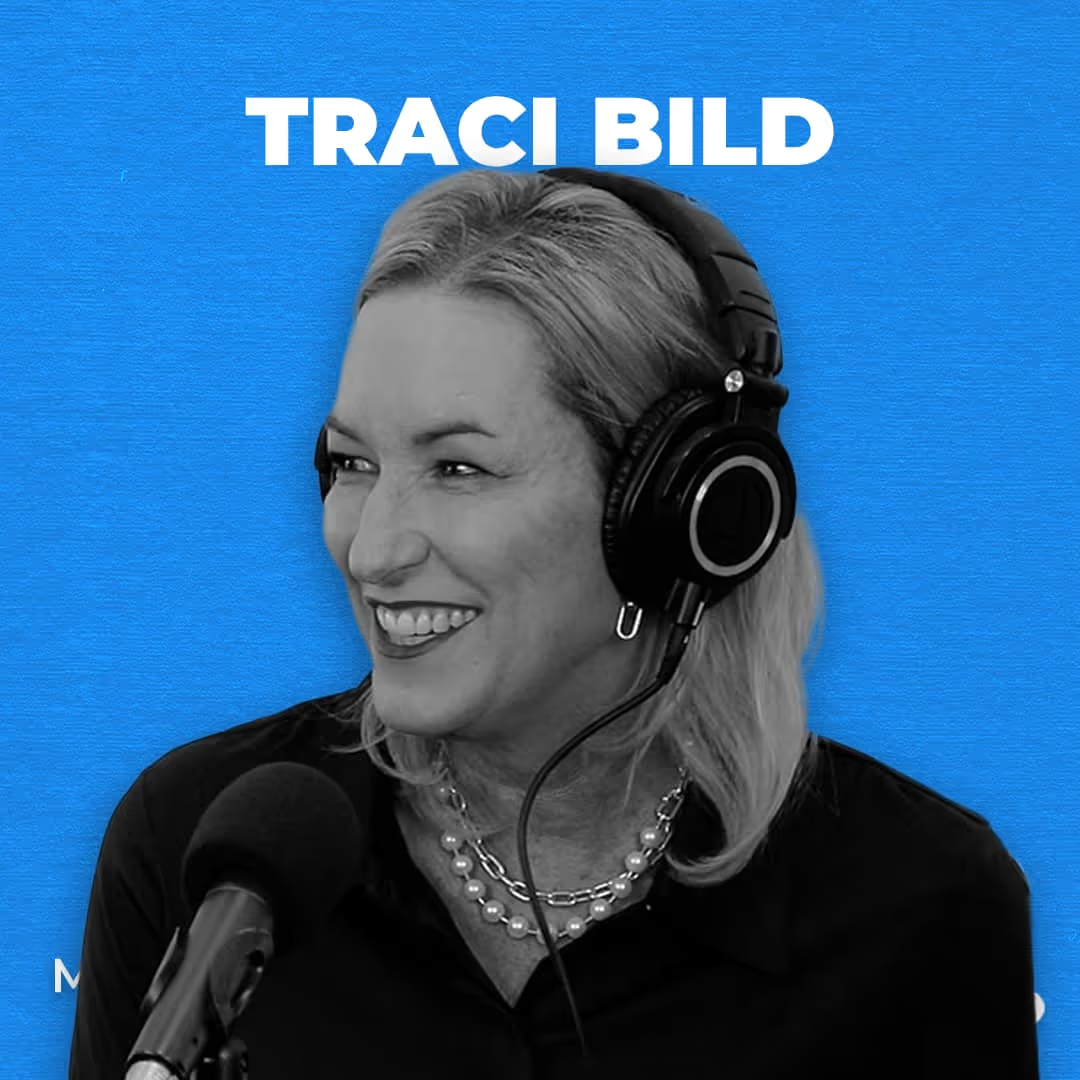
Are traditional sales teams a thing of the past? Find out from Traci Bild on this episode of Bridge the Gap.
I would say I have never been more excited in my life, because in the last two years, I've noticed more change than I have in the last ten.
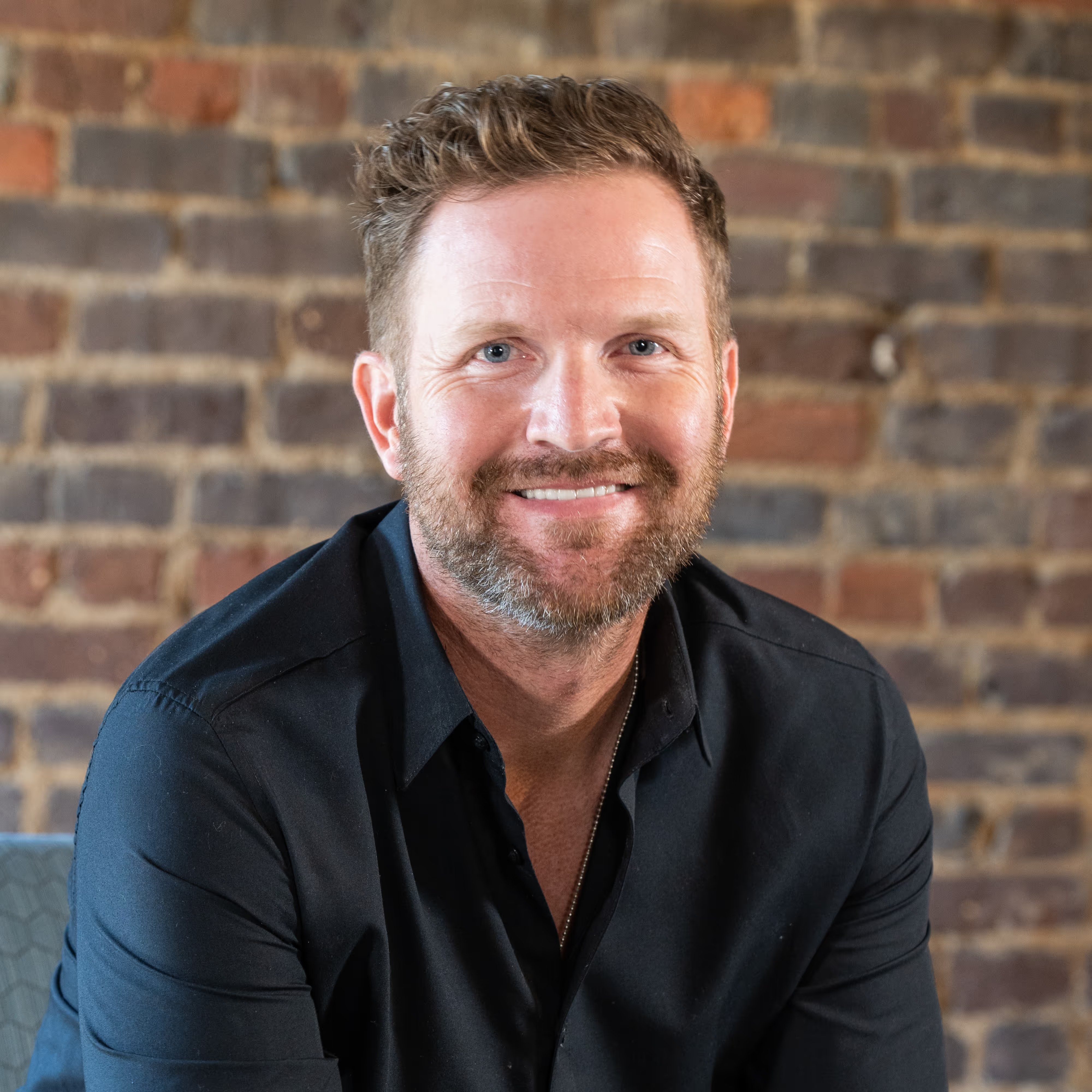
Josh Crisp is a senior living executive with more than 15 years of experience in development, construction, and management of senior living communities across the southeast.
Learn More ▶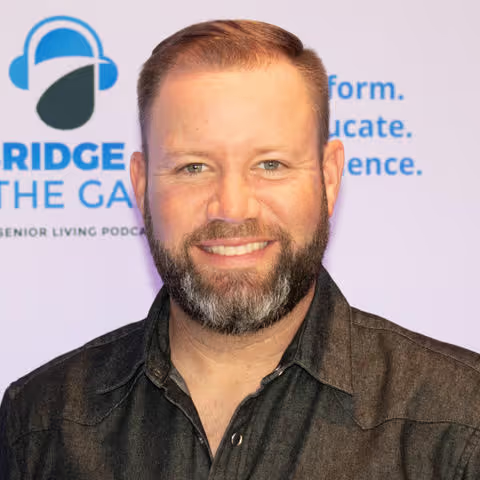
Lucas McCurdy is the founder of The Bridge Group Construction based in Dallas, Texas. Widely known as “The Senior Living Fan”.
Learn More ▶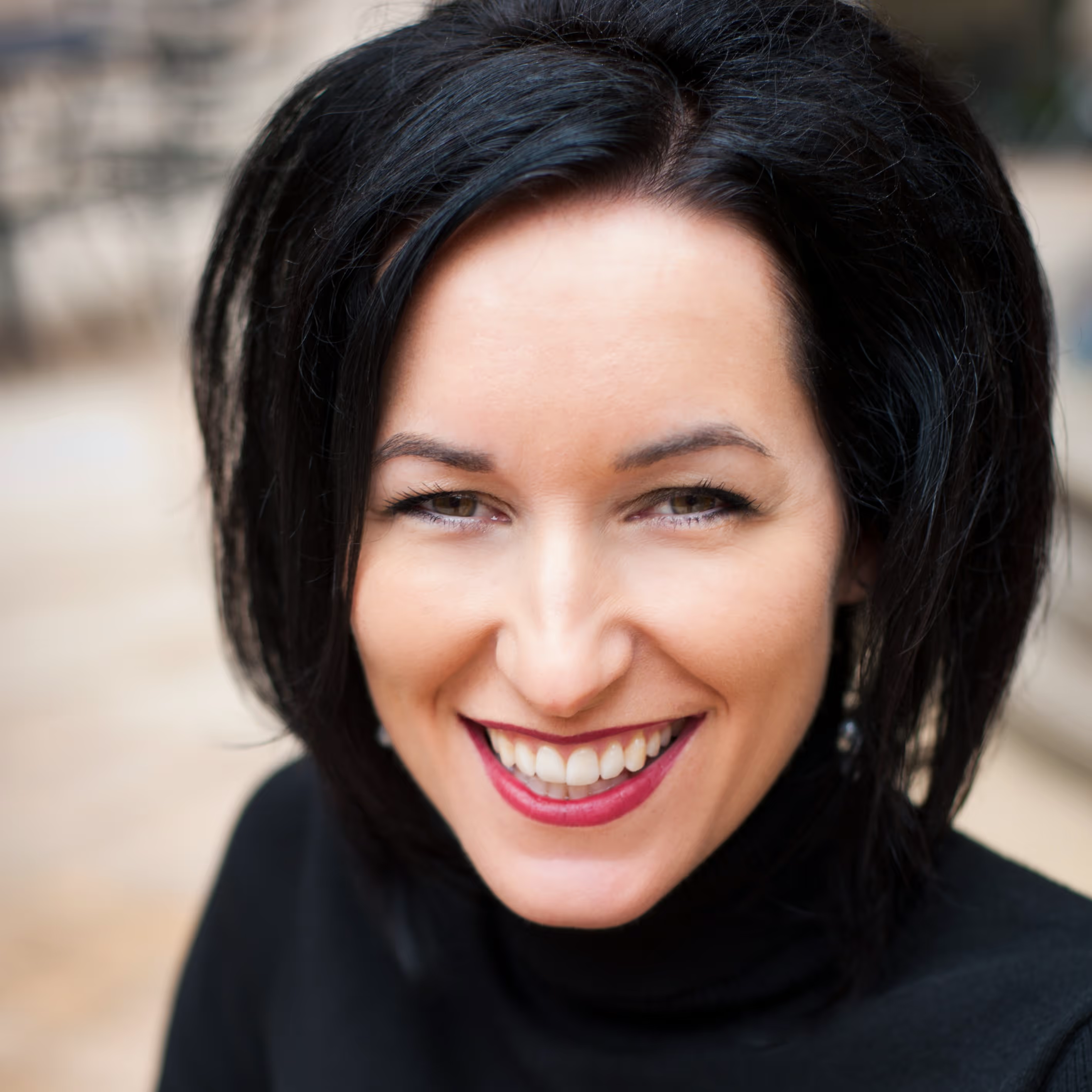
Traci Bild is the Founder & CEO of Bild & Company, a national healthcare consulting firm with deep roots in senior living. Providing the sales and marketing infrastructure for small-midsize operators.
Learn More ▶If you're going to spend money on Google ads, you'd better make sure you have a process and a system to capture and convert those leads to tours.
This week on Bridge the Gap, Josh and Lucas sit down with Traci Bild, Chief Visionary Officer at Bild & Co. Traci shares actionable insights on how senior living operators can redefine sales, optimize marketing, and fill communities faster with a segmented approach. Learn why the traditional salesperson role may be disappearing, how to manage leads efficiently, reduce burnout, and leverage technology and outsourced solutions for maximum occupancy.
This week we cover:
Meet the Hosts:
Connect with Our Guest
Hear Traci on BTG Network.
Produced by Solinity Marketing.
Become a sponsor of Bridge the Gap.
Listen to more episodes here.
This episode was recorded at the NIC Fall Conference 2025






Intro
Welcome to season eight of Bridge the Gap, a podcast dedicated to informing, educating, and influencing the future of housing and services for seniors. The BTG network is powered by sponsors, Aline, NIC MAP, Procare HR, Sage, Hamilton CapTel, ServiceMaster, The Bridge Group Construction, and Solinty, and produced by Solinity Marketing. Bridge the Gap in three, two.
01:08 - 01:22
Lucas McCurdy
Welcome to Bridge the Gap podcast, the senior Living podcast with Josh and Lucas. Rounding out some great conversations here at the Fall NIC Conference, Austin, Texas. We have a returning guest, one that almost everybody knows. Welcome to the program. Tracy Bild.
01:22 - 01:24
Traci Bild
Thank you. I'm excited to be here with you guys.
01:24 - 02:11
Lucas McCurdy
It is always exciting. You know, you motivate us every time we talk to you. We are motivated. I feel like I'm ready to conquer the world and really set some goals and accomplish them. So I'm excited that you're back on our show and our guests, and our audience is just going to love this. So there's a lot going on.
We've talked about momentum. We've talked about occupancy. We've talked about this wave of people. We've talked about affordability. We've talked about development. There are a lot of conversations taking place. And even in sales and marketing, there are a lot of conversations to have because with all of this wave of people, do we need to do sales and marketing anymore, or is it just going to fill our buildings magically? How are you approaching this with your current customers that you're working with?
02:11 - 03:45
Traci Bild
That is such a great question, because I would say I have never been more excited in my life, because in the last two years, I've noticed more change than I have in the last ten. Right? And it's requiring us to get out of our comfort zones and to really think differently. And my title is technically Chief Visionary Officer because Jennifer is our CEO.
So my job is to really get ahead of what's happening. And because we work with so many different types of operators, rights, equity, I get this window into a very vast world and we speak with owners, operators, the employees, we really have a vast view. So I feel like we have a lot of insight that maybe someone who has a specialty in one area, say, operations or just marketing or just sales might not see.
So yes, we still need marketing. We don't need sales as much. If we want to be mediocre and we want to be great and fill our buildings faster with a more optimized margin in mind, we should be striving to be excellent at sales, and it's not evolved at all. In my opinion. It's still really behind the eight ball marketing's evolved, but sales has not, and we see that in the data. We see it with projects we're working on, and it's just something that is always kind of lagging behind because who like sales, right? You know, people don't like it.
03:45 - 04:03
Josh Crisp
Well, I think a lot of people who were listening, even like myself, when you said we don't need sales, I think that's what you said. But what do you mean by that? So if sales go away, does that mean our salespeople in the buildings that we have they're going away or who's doing that? Or they magically show up in the building? What do you mean by that?
04:03 - 04:04
Traci Bild
We're not going to be popular.
04:04 - 04:06
Josh Crisp
Well, that's okay.
04:06 - 06:44
Traci Bild
Super candid with you. Yeah. So for 25 years, we have been sales trainers. Right. So I feel like build selling, professional selling to the senior living sector. I would say in the last two years, 75% of our work has really been in operations in marketing. And the reason we can't do as much in sales is because, well, Jennifer and I have a whole concept and it's called the death of the salesperson.
We believe that the sales role is going to be gone within two years, and senior living, maybe three, can't keep them. They turn over every six to eight months. If you are a family-owned owned, you might keep them a year or two. But when they turn over, the sales pipeline goes with them, and the revenue dips, and then you hire someone else, and you're sure they're going to be the right person.
And then four months later, they resign, and you start over. And so while I love salespeople, we don't have the longevity or the loyalty that we used to have as a sector. And it's been shocking. Like so, we've been evolving and recognizing that the job of sales is so hard today. If you think about it, just in one community, you can have 80 to 100 paid aggregator leads, of which maybe 3 to 10% will close and move in.
But somebody has to work all those leads. Then you have web form leads. You have Collins. People can't keep up with the job. So we've found that people are burning out. They want to tour. They're not making the follow-up calls. They missed. 90% of, leads that we shop are completely missed as they fall through the cracks. So when we submit a web form.
So I'm not saying that people aren't trying. I think there have been so many changes. The job has gotten harder. We've lost some of our best talent post-COVID, and the role has to evolve because the salesperson today, in its current state, is not able to do the full scope of the job on their own. Does that make sense?
And you think that doesn't even include professional outreach, which is where I mean, the conversions on those are like three times any other type of lead. So we need salespeople. But I think we're going to get to the point, and we're seeing this as this acceleration of, of, move ends. People are happy with their occupancy, but there's so much noise in the form of leads and it's just we're still finding that a lot of those leads are not quality. All right. And a small percentage are closing. So we just need to reinvent that sales role. We need to segment it.
06:44 - 06:55
Josh Crisp
Yeah. And so the leads you mentioned are not quality. Does that mean our marketing is not good? We're not hitting the right targets with the right messaging. What do you see there? Are we just not getting the right message to the market?
06:55 - 08:00
Traci Bild
I think that in our research, Jennifer does a lot with the research team for data analysis, and we release that monthly. And what we're seeing is third-party aggregators, and they are just bombarding the market. And as a result, consumers are stepping back and they're not responding. So one of the things we always do in a turnaround is we assess the quality of the database and what we're seeing, even at build-to-act with, you know, working thousands, thousands of leads.
It used to be you could follow up with a lead, and they would say, not interested, already moved, mom staying at home. They don't even respond today. Right. They are just quiet. So we're finding that with all the third-party aggregators just bombarding them with texts and emails and phone calls, and then of course, all the Google ads that all the operators are doing, there's just a lot of noise.
And so the quality is not there. There's a lot, a lot of leads, but a small percentage are high quality. And as a result, I think salespeople are burnout. They don't know what to work. There's so many. How do I know which ones are the good ones? And unfortunately, a lot of those we see are falling through the cracks.
08:00 - 08:20
Josh Crisp
What do you think the future looks like for those operators right now that are like, oh my gosh, I'm still building out in my pro forma, the same budget, the same staffing pattern. I've got the salespeople, I've got, what are you what is your advice to them. Like how do you change that culture? How do you change that flow from the lead all the way through the move in this year?
08:20 - 10:34
Traci Bild
An epiphany was in the last few months that the day of the kind of the great operator, with their loyal staff, that stays for a long time, and they're there 3 to 5 years. That is gone. We're big business now, and we are feeling that in our employee turnover, so we are addressing it. We just built an outsourced Salesforce with build X.
I thought it was crazy when we started that. I didn't want to do that because I'm like, we train salespeople, we're going to cannibalize ourselves. Jennifer had the foresight to realize, no, we have to segment the sales cycle. Meaning, we need people with deep expertise to source those web leads. Right? All those third-party aggregators. But the same person doing that does not have the skill set to hunt.
Meaning doing all that follow-up lead nurturing. It will take us 18 to 19 follow-up calls to get someone to tour who did not respond on that first attempt. Right. No salesperson is going to do that. And I think the reason I said people might get upset with me is that we've always trained salespeople. We love salespeople.
The job is to change how we educate and train our salespeople, the tools we provide them have has not really changed. We're still expecting them to do this job, and they're burnt out. They don't want to pick up the phone. You guys know it's very hard for people to drill down and create meaningful discussion. Relationship building trust. It's kind of like those are skills of the past.
And we're not seeing that in any of our research on mystery shops or on-site shops. And all the feedback that we're getting through comp analysis, it's, and maybe we don't need that anymore because we have the volume, but I still think we owe it to our customers to have a phenomenal buyer experience. So our answer is to segment the sale.
Build out your own call center, hire someone like build x or someone else that's out there, but have people are experts at those web forms that really build trust, building a relationship, personalizing that experience. Give them a five-star fabulous experience, have someone on site that can turn personalize based on that information, and then have another team do your follow-up in closing, because that's really a lot of grunt work.
It's exhausting. No one wants to do it, but when you do it, you build your pipeline, you get momentum, and you can get beyond 94, 95% and start to push your rates.
10:34 - 11:23
Josh Crisp
Well, that's a little cheat sheet. That's just going to be a teaser for people to want to reach out to you. I know a lot of our audience is raising an eyebrow right now and hasn't really thought of maybe some of that. So here's tons of optimism. We've heard it from everybody. A lot of excitement. Even you said you're excited.
And optimistic. Lucas and I are. So we feel the energy, but it's really interesting. And I think you touched on this, even in the conversation before we started recording, was there's a big difference in the conversations that happen here at Nic and what we actually are doing in the field, at the community level. What do you think some of the things are that should be rising to the top that we're not talking about, that we should be talking about at the higher level that you're seeing out in, in daily operations in all these communities?
11:23 - 13:21
Traci Bild
I'm still seeing silos. And silos don't work anymore. Right. So sales, marketing, and operations need to work together. So just this morning I was where, you know, to me, if you're going to spend money 3 to 5000 or whatever, you're spending a month on Google ads, you better make sure some you have a process and a system to capture and convert those leads to tours.
So whenever we launch Google ad campaigns, for example, I automatically order through research shops every today I got five shops back on a new client, and every time we do this, I don't even know what the problem is. They don't make it through to a salesperson. And actually, I got some stats from research today just coming in for this call.
And 92% of web leads go unanswered in 24 hours. That's just what I saw this morning. So we launched a campaign and we understand that ops needs to make sure there's some system process, chat bot, automation, something where those leads that you just paid for are immediately, honestly within two hours responded to. But we find that 92% they don't get a call till the next day.
So I saw those this morning. Nothing I'll see if they come in tomorrow. But this is where I'll go to that client. Say, listen, something's broken ops, you're spending money, people are responding, but no one's capturing the lead, so it's a waste even more interesting is 80% received no response at all.
So you think about what we're spending per year in marketing and the fact that we still have a broken buyer experience and the frustration that the families feel, which I went through myself when I'm with my mom, I couldn't get anybody on the phone either. And honestly, nobody's calling. They're submitting forms, they're going online. But back to the broken infrastructure. A salesperson is not going to sit at their computer and watch a dashboard to see when a lead is coming in. It just needs to be set up differently where somebody is doing that in-house out of house, but not that salesperson. The salesperson should be doing personalized tours, closing an outreach to grow organic traffic.
13:21 - 13:44
Josh Crisp
Yeah. Well, I think, everybody, when you say that, it makes perfect sense. So why is it so slow to change? What? Like, why what what is so difficult? What is our real challenge? And when we know the information, and you preach that is it. Is it really that difficult to change or is it we're just slow as organizations or we're too big as an organization and slow to change? What do you what do you think it is?
13:44 - 15:55
Traci Bild
I'm actually really impressed with the level of change our sector has made in the last 3 to 4 years. Like, seriously, that's why I'm so fired up. People are ready. They're changing. But there is a very protective, antiquated mindset around sales. And Jennifer would say they just want a body in the building because that body can also go serve tea.
If someone doesn't show up in the dining room, right, they can manned the front desk if needed. But this is your revenue machine. This is the engine in your Porsche or maybe in your Hyundai. I don't know, but we're not treating that role as the revenue drivers. It should. And Iraq, my brain every day is like at build ex we 300% more activity than a typical sales person at half the price.
Why is that so hard to figure out. And we we don't want people to lose their jobs. We want people to to keep their jobs. But the reality is we're thinking that sales will might need to evolve into more of an influencer role. Like how are they using social media, how are they leveraging the residents and getting their community out on TikTok and Facebook and really bringing it to life so people can see?
Like when I think about my mom, who lives in a lifelong community, people just think, oh, poor thing. She's like in an independent living community. She's like fought over every night. She's having dinner with 7 or 8 people. They literally fight over her. You know, she has tea every morning now with her best friend. They watch her dog when she's sick.
They feed her cat when she's in the hospital. She's thriving. But we're not telling that story to we right now. And that's kind of my job as a visionary. Where are we inventing what does the sales role tomorrow look like? It's definitely not that person in the building. 9 to 5, kind of waiting on a tour. You know, they're not going to be there on the calls.
Come in. They're not going to be sitting there in the leads. Come in. They should be touring. They might be in stand up, they might be doing something else. But this role needs to drastically change. And then as we know, once we start to fill, say we're at 96, 97, I don't know if there will be a mission quarter.
Coordinators are what they'll be. That's why I believe we're going to go to this segmented kind of outsourced sales function, because people aren't going want to have a full time salesperson in the building when you're sitting at 98%. So it is going to change. Yeah.
15:55 - 16:28
Josh Crisp
But I would imagine that's also kind of a great opportunity because, I think years ago, your smaller regional operators really were handicapped because they didn't have the capacity to have all these disciplines and a sales trainer and all these different regionals and all that. But now with all the tools and automations and outsourced options and things like that, it seems like it's equipping a small regional operator to be very impactful, in a big way that maybe they used to cannot be so impactful in sales.
16:28 - 17:26
Traci Bild
Yeah. And then we spent a lot of our time with software integration of other people's software, but they have to have it. So we're like, where's your chatbot? What is your CRM? And they all need to talk. And the number one thing we need is reporting. You'd be shocked at how many people still don't have good reporting. And I just did a turnaround asset turnaround.
Of course, for Cship with NIC. And when I was talking to Ray he's like, well where's all the data? I'm like, this is a problem. When we go to turnaround asset nine out of ten times, they don't have good data. And I know that sounds shocking in this day and age, but people aren't either. The CRM is not being used properly, so the data is bad.
People should preface when they send data. It's not right. It's not good. We're like, it's a start. So you do want to leverage these really incredible tools that are out there. But what we also see is that people are paying a lot for these different software platforms, but they're not using them to their full capacity. So we like to make sure they understand how to use them to get the most out of them, to enhance their overall sales process and revenue engine.
17:26 - 18:07
Josh Crisp
I'm curious. So switching gears a little bit, because you are out in so many communities and you're, you're hearing, from so many of these leads, inquiries, whatever we want to call them, the people that are making the decisions, everybody's talking about this next generation, consumer buyer. Not quite here yet, but what do you think, is going to be the big demand and the big shift in what is offered because obviously we're having to put our services out there and our marketing, what we're marketing. But do you think it's going to be radically different than the product that we're selling right now as far as services and housing, or what are you seeing out there and hearing?
18:07 - 20:07
Traci Bild
I think how we communicate needs to change. So even my own mom, when I told her, I just want you to have lunch with this community, I mean, she was crying. But then when I actually got her to the community, and she saw that it was people like her, her age, they were having lunch together and found themselves in the pool.
Then she started crying again because she realized she didn't have that in her life. I think that we're not going to miraculously wake up and have a different kind of product. But I do think we're having a bit of an identity crisis, and we've done a lot of brand refresh because everybody looks and sounds the same. They have the same stock photos on the photo.
The websites look the same, even like active adult we're finding. Who are you? Are you 55 plus active adult or independent living? You really need to know who you are. So we're helping people figure that out and seeing what the small scene is. Maybe under ten operators who are private owners, who are in their buildings like they really are, they're there with their staff.
They're highly communicative. To us. We're saying that's your differentiating factor. Why are you not telling that story? Because it's very different than someone who has 75, 80 buildings. So I think that we need to better communicate what our communities actually do for people's lives. I don't think we've caught that. And that's where we can circle back to the influencer aspect that we're trying to figure out.
Do we bring in young college students and have their cameras? We're trying to get people to identify residents, to be influencers. We found some authors and different things. That's who we would like. But then what are we going to give them for doing that? Are we going to give them $50 off rent for every poster? They're not just going to do it for free.
So those are the kind of things we're working through with our clients to differentiate how they can stand out. And then the other thing we haven't talked about is, GPT search, right? So now we're working on why people are going to GPT-3. How do we make sure our clients show up there? There's so much exciting stuff that is happening right now. And I think everybody needs to be in a growth mindset with an open mind and be willing to pivot and try new things.
20:07 - 20:50
Josh Crisp
Yeah. And on that topic, I heard someone talking about that. The difference In just your traditional, I think we're just now really starting to get good at or maybe even talk about and recognize the importance of SEO, but now it's the chat and all those searches, and that's a whole different ballgame. And, the sophistication, I'm just wondering, like, are operators, prepared for that or is that what kind of partners do they need to be looking for?
You talk. So much of the market share of our industry is still the the 5 to 10 bid or 5 to 10 community operator are are they equipped to do this. Is this all outsourced to to help with this or can I do this in-house?
20:50 - 22:34
Traci Bild
Unless you have that rare individual who really has been in the weeds and understands, say, Google ads, Google, you know, search, it's really complex. And we even see people who use firms outside the space. People cause for a reason, right? My ads are not performing on, you know, we just have a client spending 10,000 a month or running another 10,000 on commercials, but they have no leads.
You know, the goal is you have to really understand our buyer, who typically is an adult daughter, right? We have to know their age, what their triggers are, the emotional triggers to get them to click on your ad. So to me, it's expertise is more important now than ever. Like, we know we're going to go a 15-mile radius from that community for these ads.
We're going to get more bang for our buck for the dollar, whereas someone who's not in the space might go an hour or two out because they don't realize people buy locally. They want to be 15 minutes from. My mom is literally like eight miles from me, right? I don't want to drive an hour to see her.
Right. So I think it's just you to be really careful and have high expectations and demand that your partners communicate with you, not just clicks and impressions like, what's that resulting in and leads and movies? That's all we look at, because at the end of the day, you don't care. It's to us what we're finding is there's a lot of noise, we need the quality and we can have less leads, higher quality and more movies.
Like that's where we need to challenge our partners to make sure they're simplifying reports that operators can understand, can even have a dictionary of terms. Because marketing is very complex. It changes all the time. And now, like you said, with AI search ChatGPT, we're not seeing a lot done with that. We're learning it ourselves. And it's exciting and it's fun and we'll have it figured out soon, but we don't have it figured out yet.
22:34 - 22:49
Josh Crisp
Well, a lot of opportunities. And Lucas, it's always it's like a master class anytime we get to sit down. And. Traci, it's been too long. I know it's been way too long, so we need to be having you on more, more often. Such great nuggets for our listeners.
22:49 - 23:29
Lucas McCurdy
So good. Thank you so much for your time today, Traci. We really appreciate it. Well and to our listeners who want to hear more from Tracy. You can go to btgvoice.com and you can click on The Contributor Wednesday series. Tracy has a whole library of shows that she has already done. And you know what? Just because she recorded them in the past does not mean it's out of date.
A lot of this information still remains true today. These principles that Traci has been teaching people for so long. You can go back and hear that for free on our network there. You can go to, LinkedIn and connect with us there. And we'd love to hear from you. Thanks for listening to another great episode of Bridge the Gap.
Outro
Thanks for listening to Bridge the Gap podcast with Josh and Lucas. Connect with the BTG network team and use your voice to influence the industry by connecting with us at btgvoice.com.


