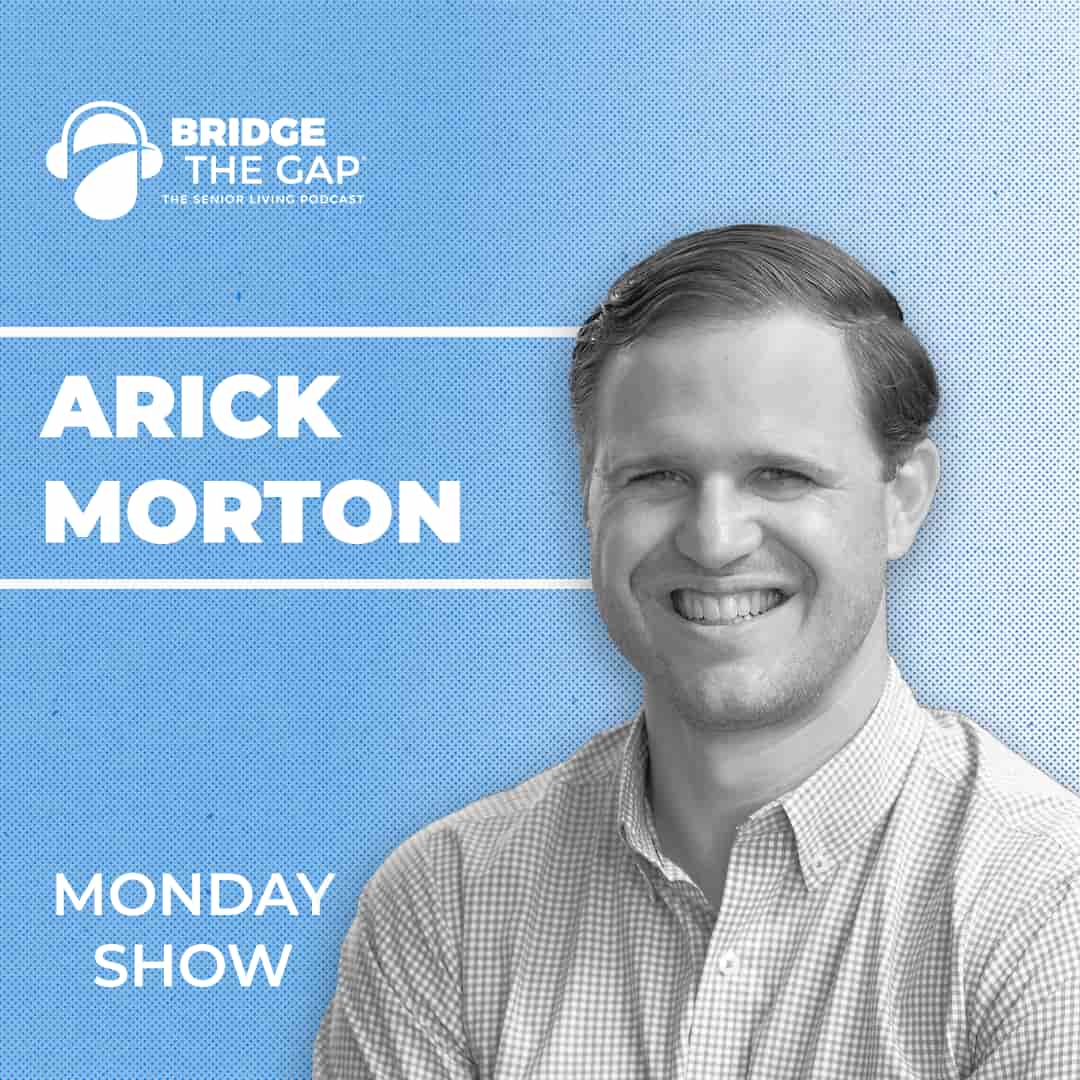
Hear how we closed out 2025 from Arick Morton of NIC MAP and catch his predictions for what could be ahead.
On the demand side, it's really firing on all cylinders.

Josh Crisp is a senior living executive with more than 15 years of experience in development, construction, and management of senior living communities across the southeast.
Learn More ▶
Lucas McCurdy is the founder of The Bridge Group Construction based in Dallas, Texas. Widely known as “The Senior Living Fan”.
Learn More ▶
Inventory growth and new starts are still suppressed.
In this episode, Josh and Lucas sit down with returning guest Arick Morton, CEO of NIC MAP. Arick shares key takeaways from his conference session, including the widening mismatch between senior housing supply and demand, rising occupancy across nearly every market, and what these trends mean for life plan and nonprofit communities.
In this episode, we cover:
Senior housing occupancy approaching the 90% threshold
Life plan communities and nonprofit sector growth
Expansion, renovation, and satellite campus strategies
NIC MAP’s expanded markets and AI-driven analytics
Meet the Hosts:
Connect with Our Guest
Produced by Solinity Marketing.
Become a sponsor of Bridge the Gap.
Listen to more episodes here.








00:01 - 00:13
Lucas McCurdy
Welcome to Bridge the Gap podcast, the senior Living podcast with Josh and Lucas. Another great day here in Boston. LeadingAge 2025. We've got a great friend returning guest Arick Morton. NIC MAP, welcome back to the show.
00:13 - 00:17
Arick Morton
Thank you always a pleasure to be here. And I'm excited to, to do this. Let's go.
00:17 - 00:31
Lucas McCurdy
Absolutely. And so you spoke here at LeadingAge. There's a ton of curriculum here. Yeah. Huge turnout. And, we would love to pick your brain about what you spoke on this morning and how the audience reacted to it.
00:31 - 00:48
Arick Morton
it is, quite a conference. My first LeadingAge conference. It is, it's a large. But they do it right out here. So, it was fun. You know, I had the pleasure of doing a session with, NIC and Greystone, kind of looking at, you know, the growth, what growth is going to look like, what are the macro drivers of growth?
00:48 - 02:03
Arick Morton
And then what are the, you know, kind of specific tactics that particularly life plan communities are taking to, to kind of meet the growing need that we've obviously spoken a lot about on, on, this podcast and in other places, and so, it was a, it was a pretty packed room. So I think everybody's excited to, to kind of, you know, gear up for the future.
I think, you know, I did my kind of standard talk on, you know, what's coming down the pike and kind of what the mismatch between supply and demand is right now. What I thought was really interesting was Greystones deep dive into, you know, kind of what that means for life plan communities, how you're seeing a lot of them kind of repurpose their skills into assisted living or memory care and then kind of either meet the skilled promise with in-house services or through contracting out, you know, just the increase in unit size, the increase in project costs.
So, you know, I think there's a lot of kind of interesting dynamics there with like, satellite campuses. So it's, you know, it is a, they're much larger campuses than, you know, your typical rental model. And, you know, they it unlocks a lot more kind of synergistic possibilities, I would say. So it was really interesting. That's you know, I spend more of my time on the rental side. So, you know, it was really interesting to, to kind of dive deep on that.
02:03 - 02:26
Josh Crisp
Well, Arick, so I know you guys continue at NIC MAP to grow, into additional markets. You said LeadingAge, this is your first event. Yeah. Does that mark a specific strategy to maybe, to to go after the nonprofit sector or provide them with more specific data and information or where are you guys on that?
02:26 - 04:04
Arick Morton
you know, we've tracked, CCRC and CCRC performance for 20 years, 2026. And you can believe it'll be 20 years of, of Nic map and so, you know, we've always track that I would say that has historically not necessarily been kind of the the largest part of where NIC MAP spends its time. You know, a lot of that I think is, is probably two things.
One, a lot of courses are, you know, kind of will be outside of those markets that we've tracked historically. So we're expanding our metro coverage, so that will bring more of them in. And I think a lot of them have been historically kind of single site. And so, you know, kind of looking across a broad portfolio and they, you know, a lot of them are like, hey, know, I kind of know what's going on.
And what you're seeing is consolidation. Decent amount of consolidation on the, CCRC side. So that allows us the opportunity, I think, to to bring some more value to kind of a multi-site operations. And I think the other piece of it is, you know, the need for growth, right in, in so, you know, that is really picking up just the same as it is on the rental side.
And so I think that's kind of it's like, hey, I have a full waitlist, a lot of money to talk to. You're like, hey, I have a five-year wait list. And you know, 100% occupancy. So, yeah, I don't really need market data. I, I'm doing just fine. I think obviously now everybody's saying that may be true, but one, you know, if somebody else comes into your market that that five-year waitlist might evaporate pretty quickly.
But then on top of it, I mean, it's it's not just offensive. It's also offensive. There's a ton of opportunity there. So I think we're starting to see, you know, kind of the nonprofit life planned side respond to the same underlying market forces that, you know, for for-profit rental side has really been kind of geared up on over the last few years. And so, yeah, that's kind of creating opportunities for us on both sides.
04:04 - 04:31
Josh Crisp
you know, I've heard a lot of buzz as we've been walking through the expo halls, talking to different operators, providers of different solutions. And it seems that, the nonprofit sector just continues to grow. And a lot of operators, providers, developers are really starting to think of, how they stack their capital, not just under a more traditional for-profit model, but how can we diversify into the nonprofit sector?
04:31 - 04:55
Josh Crisp
So I think it's a great time to be part of LeadingAge. They obviously have a huge show here. This expo center, we were just talking about that. So let's, roll that into a little bit. I'm assuming that in your session you also probably, provided some updates. You guys do a wonderful job at these quarterly reports. And we're coming off of the third quarter report. Is that something you shared with the audience?
04:55 - 06:59
Arick Morton
Yeah, we talked a little bit about it. I mean, it's it's more of the same. So I think occupancy went up, globally in senior housing by about, 70 basis points, which is really, you know, kind of incredible. I think, you know, we're on roughly track to produce, maybe a 200 basis points rent this year, which, you know, I mean, that's a massive occupancy game doesn’t sound, like, all that much, but, I mean, that's really a massive occupancy gain.
I think we're we're roughly touching 89% as an industry. So, you know, that should put us within, you know, rounding distance of, of 90, by the end of the year would be probably a decent prediction. Just based on historical seasonality. And then, you know, you're seeing independent living's above 90. Now, the life plan side is remains incredibly strong.
And so, you know, you're kind of on the demand side. I mean it's it's really firing on all cylinders. And I think I think there's a psychological barrier probably when we kind of cross 90, I think, you know, we're getting these big absorption gains. But the headline numbers still, you know, 8988 okay. And so I think once it kind of crosses 90 and then you're continuing to stack these large in sorption prints, I think that's going to be kind of a real, you know, psychological change, that will will come across and, you know, on the supply growth side, I mean, it's it's kind of more of the same.
It's, you know, inventory growth and new starts that are still suppressed, you know, relative to historical, so, you know, the story, the story kind of remains the same. But we really are seeing I mean, it's we've sliced the data, you know, by rate, tier by market type, by market, you know, call it, you know, tertiary versus primary, by age, you know, pretty much any kind of cut you can put on it.
And the trend lines are really pretty much uniform across. They might have a slightly different, you know, y intercept or whatnot, but they are they are the slope lines all look pretty much the same. So it really is, you know, best we can tell, kind of a truly broad based, dynamic that doesn't really have any notable outliers.
06:59 - 07:14
Josh Crisp
So, touching on the, the trends as you're adding more markets, are you seeing any changes or anything significant in these new markets that you're reporting on, or is it basically just staying the same?
07:14 - 08:15
Arick Morton
It's a little early. You know, we're still kind of adding the data in, but I mean, honestly, it's kind of the same story. You know, you just obviously there's some markets that have, you know, you know, in Atlanta or Houston or something that, you know, just saw a lot more supply growth over the last cycle. So you'll see, you know, it kind of depends on where you're starting from. Can can really vary. But the trend I mean it honestly I can't find I mean I spent most of you know, the post-COVID period just trying to look, is there some part of this market that's kind of doing really well and another part that's not doing really well. And honestly, it's it's kind of the same story everywhere.
So, you know, which I think is, it kind of a testament to the need basis, the broad, you know, kind of need-based dynamics that drive our industry and the significant growth of that, you know, the agent income, qualified population and need qualified population. And, you know, frankly, just not a lot of supply. So it's it's not like there's one area that somehow, you know, got some magic, difference. It's kind of it's kind of the same story pretty broadly.
08:15 - 08:30
Josh Crisp
Yeah. So futures and speculative forecasting in the 26, you know, we're getting into the fourth quarter here, entering the holiday season. Everybody's already making their plans for the big events for next year. Seems like excitement, but what would your speculation be?
08:30 - 09:28
Arick Morton
Yeah. I mean, I think I think it will continue to be, you know, last NIC was, I think the, you know, second highest attendance for any fall NIC, which is, you know, I think the second highest attendance in all of NIC history. You know, I think I've heard similar things here. I don't, you know, have as much, inside, inside baseball here as I do on the NIC side.
But, I mean, I think I think everybody's kind of seeing it. Buildings are filling up. You know, what kind of. We're finally seeing, the fall healing from Covid is, I think, really upon us. And I think everybody's, you know, pretty bullish going into the next year. And you look at the data, and there's, exogenous events aside, you know, you never know what geopolitics will bring or anything like that.
But I think, you know, at the end of the day, we've kind of we have an industry. We have an incredible need. And I think, you know, as long as the housing market keeps working and, you know, the basic infrastructure of society keeps functioning, I mean, I think we'll continue to see growth. Yeah, that's pretty significant.
09:28 - 09:44
Josh Crisp
Yeah. Lucas, you know, these market updates, you know, I don't think how lucky sometimes our audience is, realizes that they are that we get to have these one-on-one conversations with Arick and his team in this partnership. It's very, very, very valuable information.
09:44 - 10:29
Lucas McCurdy
It is. And so I'd like to ask a question about, so we're at LeadingAge. These are the live plant communities. And Kirk's in your discussion, given the data trends that you just laid out, what are the discussions from developers? Obviously, these campuses are much larger. Yeah. This is not your 80-bed AL that you can get out of the ground and probably have, you know, ready to open and 12 to 16 months.
No, no, these are major, major campuses that take a lot of planning in years and years to actually get them open and occupied. Given that the occupancy is increasing, what are the discussions? Are they thinking of expansions, renovations, or acquisitions? Or is it everything on the table right now?
10:29 - 13:20
Arick Morton
I think it's pretty much everything on the table. So we saw some really interesting data from Greystone on kind of the number of new cases that are new life playing communities that are open. I think the last two years it's been like 1 or 2. Yeah. And you know, prior to, kind of I would say prior to that, it was prior to Covid and, you know, even a little further back in the cycle, it was 5 or 10 a year.
So it really that rate of new campus, I think has slowed down dramatically. A couple interesting things that I you know, I frankly, I hadn't totally thought through. You know, it's a different financing vehicle. Right. So you're using a lot of times your entrance fee is your equity. Then you have kind of bonds, which are, you know, obviously, you know, the interest rate environment is interest rate environment at all moves together.
But I think that capital stack might be a little more flexible or a little more attractive in these market conditions. Obviously, you know, the size of everything and the cost of everything has gone up. He showed kind of the same project in oh six, and which was 250 units. I think the price is like 93 million. Now, that same, you know, 250 unit property and 250 unit campus is going to be like 220 million.
So, you know, you just obviously the costs have gone up a lot, but what's really interesting, I think for the CCRC in particular or the Life Plan communities in particular, is that they can they can do satellite campuses, right? They can they can reposition what they got. I mean, so I think they have a lot I think with such a large footprint and so much kind of scale infrastructure, I think, and, you know, such a large balance sheet, I think they have more capacity to do things and take, you know, probably, frankly, take a longer view of some of this stuff.
So, I mean, and I, you know, I think the reality is I always talk about the median data when we look at, you know, the boomers are significantly wealthier on a median basis. But when you convert that from a median to an average, I mean, the numbers jump off the page because, you know, the average, you know, a median doesn't take account for like the fact that the top people have weighed, you know, huge amounts of money.
And so I think, you know, in general and there's there's a whole gradient to the life plan segment. But, in general that tends to be a more affluent consumer. So I think that, you know, in a way they might be better positioned to kind of expand demand or to expand to meet demand. Then even though the rental model is even though the rental model is a little more agile, it's smaller, it's less risky, it's, you know, or, you know, it's less risk in terms of the amount of, you know, balance sheet risk you're taking.
So, I mean, I think it's a it's a really interesting time. And I think there's a real, you know, there's a there's a really unique opportunity for a lot of these, like playing communities to go, you know, figure out how to get their hands on 15 acres nearby. And, you know, they can serve that as hill and then they can, you know, reposition maybe one building on their existing campus to Alf and meet all that need there. So, yeah, it's, it's it's a really interesting time.
13:20 - 14:21
Lucas McCurdy
Well, and that makes a lot of sense because, I mean, they already have the reputation, the branding, a lot of these campuses' waitlist. A lot of these campuses have been around for decades. I mean, these were built in the '90s, '80s, even before. And they've been in this market for so long. Anecdotally, I personally have a project at an older community, large campus where they're taking they have a big, common area space. That's not really it's just used for various activities.
It's attached to a very small, outdated cafe. And they have, funding to do a very big modern update. Pizza oven, bistro, Roll-up doors, outdoor kitchen, patio. They basically utterly transform, very kind of like a bland space. And, the residents are very excited about this. And I'm also very excited to bring it to them and complete it.
14:21 - 14:34
Lucas McCurdy
But this is going to look like a high end hotel experience. And so I think that those types of projects are going to be more popular going forward for these older campuses to repurpose and reimagine these spaces.
14:34 - 15:31
Josh Crisp
Yeah. Well, and I think just the nonprofit model and sector in general tends to lend itself to be a lot different than the for profit sector. I mean, the governance is totally different. You've got typically influential board members, and they're chartered by their charter, by their mission to hold to the mission, to not necessarily just be driven by margin.
So, you know, it allows them to be able to reinvest in their campuses and care and, you know, things that that they candidly, strategically serve that community in that market that they're in. So, it's a huge need. All right. There's there's space for both. So, Arick, I would, not want to miss the opportunity.
You guys have been growing year over year. You're continuing to expand markets. You are diving deeper into the nonprofit sector and all the micro segments, any little teaser on anything that might be ahead for you guys in 26? That you could let us in on?
15:31 - 16:50
Arick Morton
Sure. Yeah. I mean, we're we're adding adding more markets, which, I mean, I think is something that, you know, we frankly should have done, some time ago. So apologies for that. But we're, you know, no time like the present. So we're doing that. You know, we've set up a financial benchmarking capability. You know, we've added these, in kind of basically digest that, give you a strategic analysis of what's happening around your community, that I'm, you know, absolutely thrilled about.
And I think, you know, where, you know, not to sound trite here, but where we're really spending a lot of our time is in, you know, historically, NIC MAP has provided a lot of data, and, you know, with, with the advent of AI, we can now take that data and kind of turn it into, you know, answers. Sure.
And so, you know, we're really spending a lot of time in there. I mean, we have a new tool that's coming out. We have like people are using, you know, have made access to it right now. It basically takes a rent roll and an income statement and O&M and performs kind of a comprehensive underwrite of the whole deal in a matter of like 10 or 15 minutes.
So there are some capabilities like that that I think, you know, can really transform the ability of our client base to kind of look at opportunities at scale and, and either, you know, go deep, or, or past quick, and so, you know, that's really where we'll focus a lot of our time. And, you know, I'm incredibly excited.
00;16;50;23 - 00;17;13;14
Josh Crisp
Well, that is exciting, Lucas, because, you know, that translates to membership value, provider value, anything that we can ever do to, help improve what the operators have resources to improves our industry ultimately helps the residents and the families we serve. So exciting to be partnered with NIC Map, you guys just continue to do an amazing job. So congratulations to you and your team.
17:13 - 17:22
Arick Morton
Well, thank you and to you all as well. It's been, so fun to, you know, kind of watch your growth and be a part of it or, you know, have a have a seat at the table. So thank you for the opportunity.
17:22 - 17:22
Josh Crisp
Absolutely.
17:22 - 17:31
Lucas McCurdy
Yes. So much. This is a great conversation. And, Arick, we'll let you get back to your meetings and your travel and, thank you so much for your time.
17:31 - 17:34
Arick Morton
Yeah. Thank you all and always great. I'll see you soon. Sounds good. Thank you.
17:34 - 17:47
Lucas McCurdy
And to our listeners, you can go to voice.com. Download this content so much more. Click down on those show notes and go and visit with NIC MAP. Maybe get a demo and check them out. Thanks for listening to another great episode of Bridge the Gap.
Outro
Thanks for listening to Bridge The Gap, a podcast dedicated to informing, educating, and influencing the future of housing and services for seniors. This show is powered by our sponsors: Aline, NIC MAP, Procare HR, Sage, Gibson Insurance, Hamilton CapTel, Service Master, The Bridge Group Construction and Solinity, and produced by Solinity Marketing. Connect with the BTG network team and use your voice to influence the industry by connecting with us at btgvoice.com.


