Is workforce management the new bottleneck? Hear Paul Jarvis of Procare HR give his take.
If you can be slightly better at all things related to workforce and really all the pieces of the employee journey, it has a huge downstream impact on all the things that we care about in this industry.
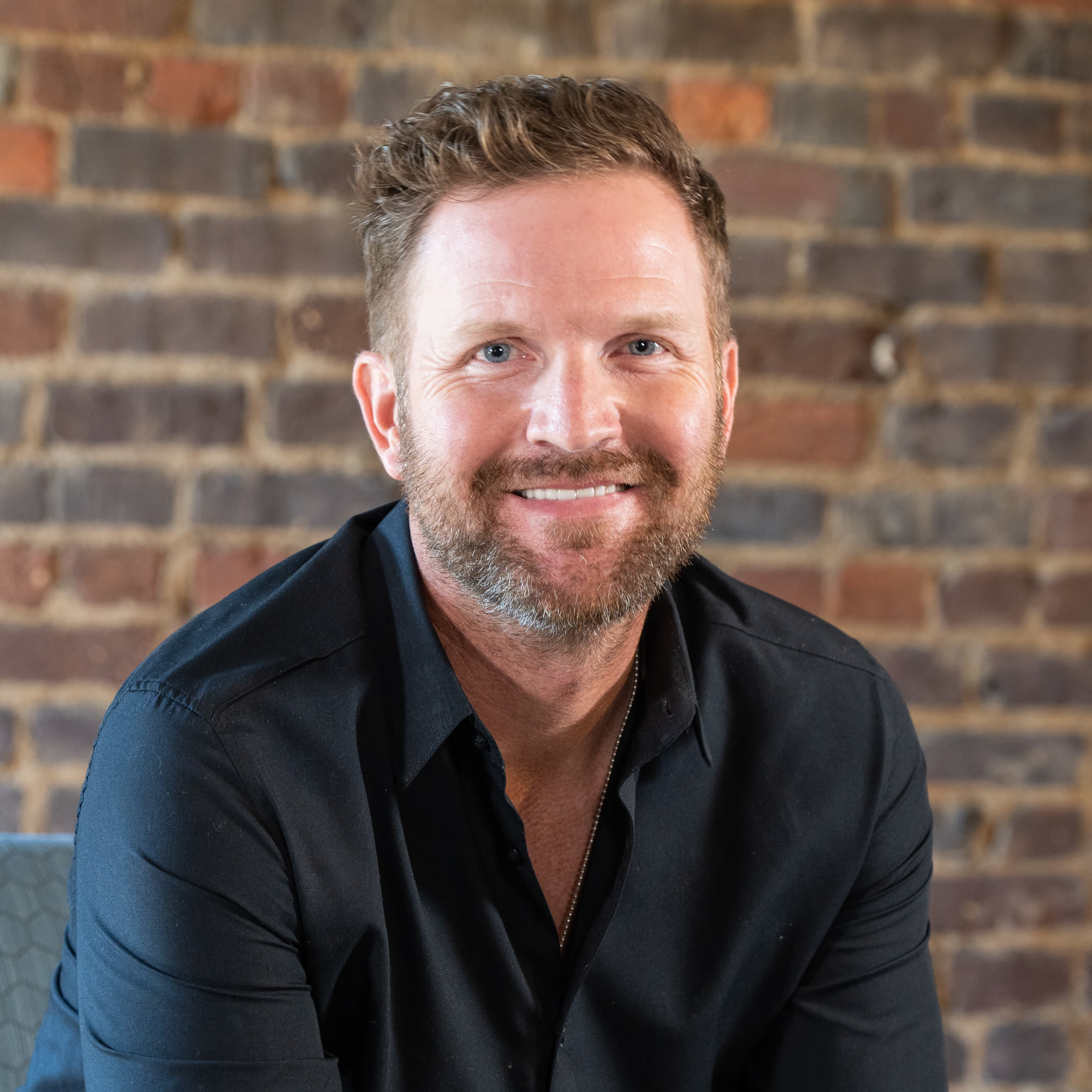
Josh Crisp is a senior living executive with more than 15 years of experience in development, construction, and management of senior living communities across the southeast.
Learn More ▶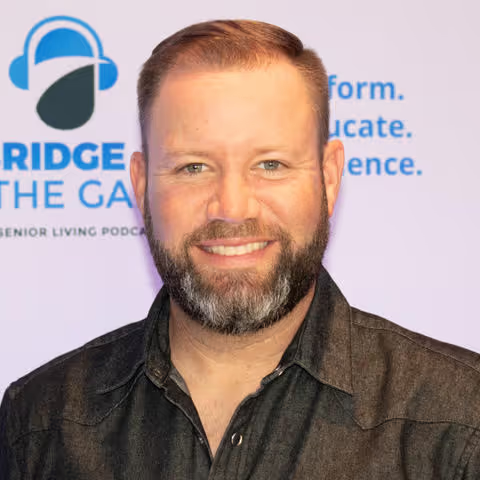
Lucas McCurdy is the founder of The Bridge Group Construction based in Dallas, Texas. Widely known as “The Senior Living Fan”.
Learn More ▶
Our goal is to be a mile wide and an inch deep and basically be able to answer 90% of questions within 30 seconds.
As senior living enters a new era of growth, workforce challenges are quickly becoming the industry’s biggest bottleneck. Recorded live from the LeadingAge National Show in Boston, hosts Josh Crisp and Lucas McCurdy sit down with Paul Jarvis, EVP of Sales and Marketing at Procare HR, to unpack what operators must do to prepare for 2026 and beyond.
This conversation explores why “getting a little bit better at everything HR-related” can have massive downstream impacts on financial performance, care outcomes, and employee satisfaction. Paul explains how viewing HR as a full employee journey, from application and onboarding to scheduling, retention, and compliance, helps operators scale confidently, especially amid acquisitions and regulatory complexity.
This week we cover:
Meet the Hosts:
Connect with Our Guest
Produced by Grit and Gravel Marketing.
Become a sponsor of Bridge the Gap.
Listen to more episodes here.







00:22 - 00:35
Lucas McCurdy
Welcome to Bridge the Gap podcast, the senior Living podcast with Josh and Lucas. Another excellent conversation here at the LeadingAge National Show in Boston. Great friend. Welcome back Paul Jarvis Procare HR welcome to the show.
00:35 - 00:36
Paul Jarvis
Thank you guys. Great to be back.
00:36 - 00:44
Lucas McCurdy
The whole team is here and enjoying the whole Boston vibes, right? Done some events so far. Dozens of sports outings, right?
00:44 - 00:52
Paul Jarvis
We were at the Pats game yesterday, pretty tight one. Had a great crew out there. Everybody came back in one piece. Nobody froze in the stadium, so we had a great time.
00:52 - 01:38
Lucas McCurdy
It's a great place to be. A lot of energy here and a lot of attendees. And, you know, there are a lot of challenges facing the opportunity. As we end this year in 25 and look forward to 2026, the industry is growing, there are new people coming in, and there are new opportunities that create new challenges. And a lot of those are related to hiring.
Yeah, a lot of those revolve around HR. I mean, Josh, you're an operator, senior living operator. You're growing your platform. I mean, how are you, and what are you hearing out there before we cut, you know, bring Paul into the conversation to bring some solutions. What are the challenges that operators are facing from a hiring standpoint?
01:38 - 02:53
Josh Crisp
Well, you set the stage really well because there is so much changing. But with that and with the great obstacles that you find yourself facing as an operator, there are also great opportunities. But, you know, not only do you know who's here at the LeadingAge event, there's every kind of tech hitting the industry. So that change alone for your labor force creates a lot of challenges.
But also like I said, opportunities, compliance-related things. The increasing regulatory environment. And, you know, while the last few years have seen new developments in our industry from a real estate perspective has been slow, acquisitions and growth and additions of communities continue to rise. So you've got a changing population, a new generation of seniors that's entering, but you also have a new generation of workforce, entering, which again, it's exciting, but it's really challenging.
You know, one of the things, Paul, that I've loved, I've heard you all say, is it's really important for operators to get a little bit better at everything they're doing workforce-related. Could you just unpack that just a little bit? Because a lot goes into that. That's a small statement, but it's a powerful statement.
02:53 - 04:13
Paul Jarvis
Yeah, that's a great place to start. So we're a ten-year-old business. And throughout the history of the company, it's all been around the idea that if you can be slightly better at all things related to workforce and really all the pieces of the employee journey, it has a huge downstream impact on all the things that we care about in this industry.
So the ability to grow in scale. You mentioned that whether through new development or acquisition, financial performance, and then there's also employee satisfaction and care outcomes and some of these things are a little bit easier to kind of put your finger on and say, okay, you know, if I'm managing over time, if I manage an agency that's obviously going to show up in my PNL pretty quickly.
Other things, if I can have a stable workforce of people who've been with the company for a long time, who can know the residents very well, as opposed to agency employees coming in and out, I think we would all say, yep, that'll probably have positive care outcomes as well. And so what we've tried to do is we've really kind of been led by our customers along the way, where they say, Hey, can you help me with that?
Can you help jump into this? I'm having trouble with this, to look at that whole employee journey from application to interview, onboarding, scheduling, being part of the workforce, retention, and say, what are all the little tweaks? What are all the points of friction? How do we keep up with compliance and regulation to just be slightly better at all these things, to have that big impact at the end of the day?
04:13 - 04:58
Josh Crisp
Well, the employment journey, as you mentioned, it's a long way it should be evolving, right. And, you know, we talk so much about culture, right? Because that's sort of this big concept we want to have a good culture. But when you get down into the weeds, the blocking and tackling, there's so many factors and facets that comprise this thing we call culture.
And it's not just the motivational pep talks. A lot of it goes into the processes and the experience that that team member has from the very first interaction. Can you talk about the intentionality you guys have when you look at partnering with an employer to be very intentional about what your culture says, through that journey?
04:58 - 06:32
Paul Jarvis
There is a lot of aspects of HR that will always live at the community level. And with our most successful clients, what we find is that they really own the culture piece, and we support behind the scenes. We support our strategy on execution and all the little things so they can spend time with their employees on the important stuff.
A specific example. So one of the ways we support our clients is with what we call our employee response team. So anytime an employee has a question on their pay stub, on their benefits, things like that, they can reach out to us. And our goal with that team is to be a mile wide and an inch deep and basically be able to answer 90% of questions within 30s.
And so, you know, you think about this from a teammate perspective, from an associate perspective. They're super busy. They have a question. It's probably impacting them in a financial way. They just need an answer quickly to get on with their lives. They don't want to have to wait on hold. They don't want you to have to call them back.
And so the goal there is to be super responsive around the way their workflow works or the way their life works. And that's just one way that we've designed it. The other piece I would say is sometimes, you know, with HR, employers can think of HR, really not employers like you could conceive HR as a dumping ground for kind of difficult conversations that you don't want to have, or, you know, HR will figure that out, or HR or the bad guys.
And really, what we want to try and do is say the managers, the supervisors, the employers own the culture, like our clients on the culture. Procare doesn't tell you what your culture is. Our job is to learn it, to understand it, and then to be able to put it into action and take all of the little stuff off your plate, and then you can really devote time to that.
06:32 - 07:34
Josh Crisp
Paul, as long as I've known you, you've been a data guy. Like you always know the numbers and the numbers behind the numbers, and I really appreciate that about you. So you guys can make really good, informed decisions, and for your partners as well. It seems to me there's still a, a huge part of our industry, a huge market share that is small to regional operators, and the growing complexity of H.R compliance, all things employment in that journey.
It seems like it just requires such sophistication and a robust team that's specifically dedicated to that. And I think as operators, sometimes when things seem to be going right, you know, you hope that they're going right because you're maybe not having a crisis at the moment. But that doesn't mean that things aren't rapidly changing all around you.
And so you've got to be constantly growing. And as you said, getting a little bit better each day. So how do you partner with an operator to make sure that they've got all of their bases covered? What does that look like in a relationship?
07:34 - 09:20
Paul Jarvis
So our implementation process to say it's very thorough, is an understatement. So on the first call, probably 30 or 40 people from Procare HR show up and we bring experts in all the different departments. You know, workers' compensation, technology, scheduling, recruiting, all the different areas. And then what we do with the client is we basically say, how do you do it today?
Who's responsible for what? Here's what we would suggest. You know, here's from our experience: what technology we bring to the table, how you can mitigate risk, how you can be more efficient if certain things don't work for you. Let's talk about them. We'll pull them apart. There's a lot of change. There's a lot of letting go of things, particularly when you mentioned kind of the smaller to mid-size operators.
And you may have experienced this like you've probably processed payroll yourself, probably picked the benefits plan for your employees. I don't know if you want to do that anymore. Right. Absolutely not. So it's an experience of saying, hey, we got this right. Like kick it over to us, tell us, what's your goal? What's the strategy? What do you want to provide?
What's the experience you want your associates to have? And then we'll start to put that into practice. But you're very right that it is. It is a lot of steps. And if you kind of, you know, flow chart it out. It's a it goes from hey client, you're doing everything to we will do this, this, this, this. Then you approve.
Then we'll do this, this, this. Then you need to do that because you are the employer of record and we cannot do that. Or you know, you need to verify the I-9 because it's a physical thing you have to see in person. Then we will do this, this, this. And so you start to get people comfortable with the idea that there is a system behind it.
There's a whole team of people who will look at it. There are checks in place, there's approvals, there's redundancy. You know, you can go on vacation and payroll will still get run. And at first people are like, Oh my gosh, this seems like a lot. And then you can kind of see the tension start to come out a little bit more like, okay, it's going to be okay, it's going to be okay. I will get to the other side of this implementation process, and then the programs will get it. So
09:20 - 09:58
Josh Crisp
you know, for an organization to follow this logic of getting a little bit better in all things H.R. I would imagine, you know, it's pretty overwhelming sometimes as an organization to think, I've got to be firing on all cylinders. I've got to be everything's got to be perfect in all departments, especially now with all the M&A you're going into, you know, operators are going into new new businesses, new organizations, new communities.
And they're like, oh, man, a lot of challenges here. But your team helping a little bit better each day. I'm assuming that has exponential numbers on the bottom line. Over the course of weeks, months, years. Is that correct?
09:58 - 10:48
Paul Jarvis
Correct. And honestly, we start working with clients in some cases even before they become clients. So we've worked with groups where they say, Hey, I'm considering you know, this growth opportunity for my business, and they'll pass over whatever information that they have on the prospective portfolio that they're looking at. And we can do an analysis on the labor performance of the building and say, hey, you know, if we were to work together, here's some areas for opportunity.
Here's some things you might consider. And sometimes, you know, there's limited available, limited information available from the seller. But I think it gives the operator a lot of confidence that, okay, from day one, if I partner with a broker, there's going to be a strategy in place. Or we may say, hey, you know, for this labor market we've recruited in these areas before we get familiar with this metro or with the workforce demographics here, but we can start looking at that stuff and kind of building a plan together even before the deal is done. Yeah. And I think that gives people a lot of, it helps them sleep at night as they're evaluating.
10:48 - 11:33
Josh Crisp
Deal. Oh, sure. What I'm assuming with the market share, you guys have grown to have an expert you have on your team. There are a lot of benchmarking opportunities to where, again, if you can develop a roadmap to get a little bit better each day, you know, you can set that goal for six months a year out and work towards it.
It seems, Lucas, like something that's a huge benefit for our business to be talking about. And, you know, I'm wondering too, with the growth that our industry is poised to have with this next generation of seniors coming in in this huge demographic, you know how much better we're going to have to be and how much more complex our labor is going to be because we have such a shortage of labor. So it's becoming more and more valuable to be able to retain that talent.
11:33 - 12:04
Paul Jarvis
It's an interesting thing that I've talked about with operators, this idea that, you know, sales and marketing will no longer be the bottleneck, theoretically. Obviously, you still need to provide an excellent product. You need to provide something that people want to a lifestyle that they want to live in, that they feel confident and that they enjoy. But on the flip side, if you can't secure enough workforce to be able to serve your customers, you know that may actually become the threshold. And so rather than competing is the wrong word, right? But competing for clients, you're essentially competing for employees, employee loyalty. And that may be the next big bottleneck that we see.
12:04 - 12:46
Lucas McCurdy
Well, that is a really good point because another one of our big partners, NIC Map, as we look through the data of the trends in the industry, particularly around occupancy. So to your point, Paul, in the next few years, sales and marketing. Yeah, I mean, everybody's going to be fighting over those good customers that we move in.
But according to NIC map data, we're about to be at full 100% occupancy theoretically in the next couple of years. How how how is Procare HR kind of looked at that and said, you're you're right. The ball is kind of moving. Like now it's workforce. We need the best workforce to provide the best care to keep these people that want to move into our community.
12:46 - 13:05
Paul Jarvis
So that's the goal, right, is to help our clients be in a position where they can say whatever comes. We have a stable workforce. We have a loyal we have a loyal, strong word right. Because you have to earn their loyalty. But we have created a situation where we believe we can meet the demands of our community, of our clients, of our capital partners, because we have developed a workforce that's ready for that.
13:05 - 13:15
Josh Crisp
Well, Lucas, what are the again, the challenge and the opportunity lays right here ahead of us. Thankfully, in our industry, we have great partners like we do.
13:15 - 13:56
Lucas McCurdy
We do. And these are great conversations to have. And I know for our listeners, Paul, they're out there thinking like, oh my gosh, you know, this is one of our big initiatives in 2026 because we know we are growing, and the workforce is a big issue. What's the best way for people to connect with you?
13:31 - 13:36
Paul Jarvis
Come find us at LeadingAge, and we're at a ton of shows. Or check out Procarehr.com.
13:36 - 13:56
Lucas McCurdy
Awesome! For those of you that want to connect with Paul and Pro Care, scroll down in the show notes, click that link and set up a meeting with them. I know that they're going to be there to help you navigate these challenging opportunities that the industry faces. And also going to be to voice.com, download this content and so much more. Thanks for listening to another great episode of Bridge the Gap.
Outro
Thanks for listening. To Bridge the Gap, a podcast dedicated to informing, educating and influencing the future of housing and services for seniors. This show is powered by our sponsors Aline, NIC MAP, Procare HR, Sage, Gibson Insurance, Hamilton CapTel, ServiceMaster, the Bridge Group Construction and Solinity and produced by Solinity Marketing. Connect with the network team and use your voice to influence the industry by visiting btgvoice.com.


