.avif)
What's the difference meaningful relationships can make in senior living management? Michael Bowden and Shae Portnoy join the show to share how.
We're working together. It's not us dictating terms or dictating what things need to be.
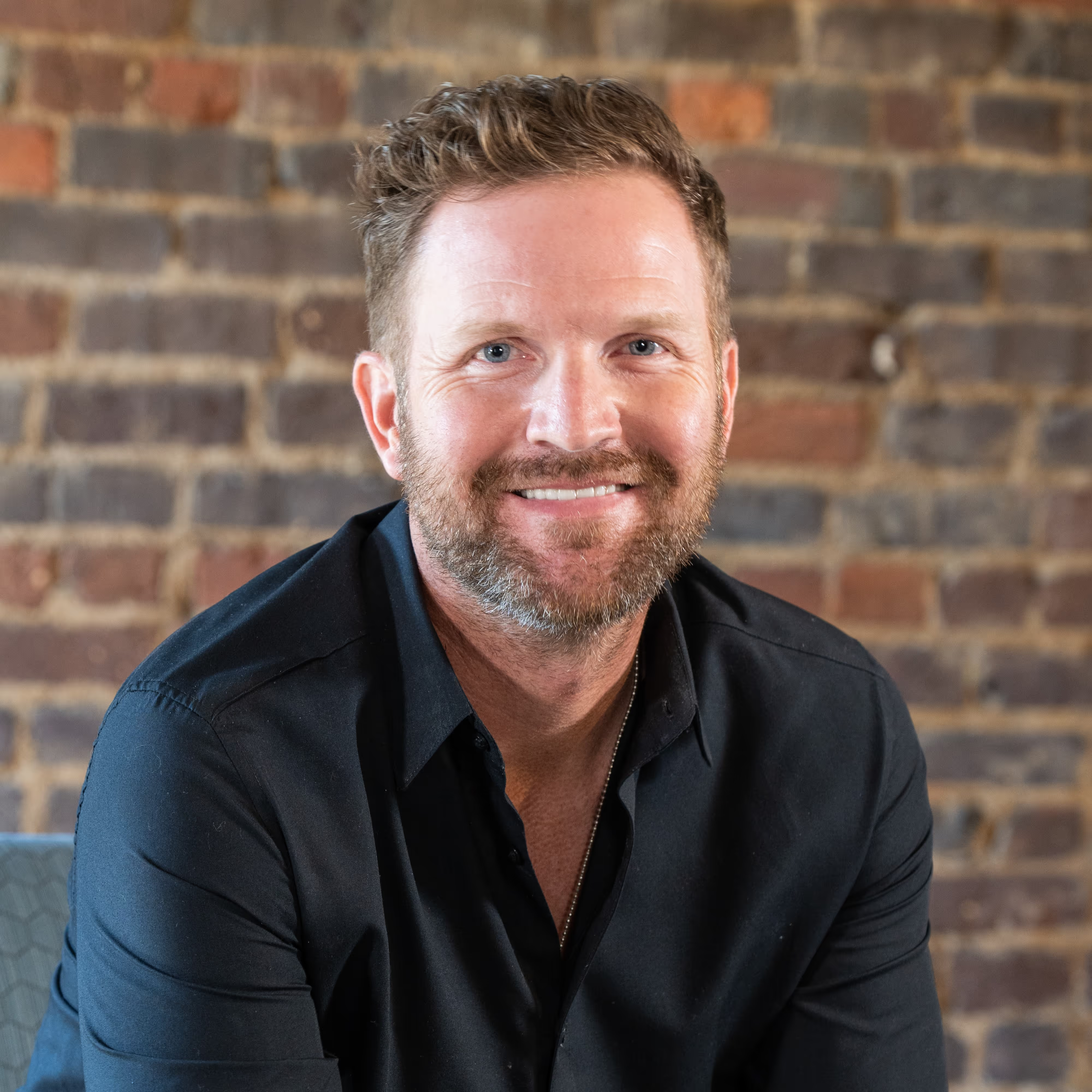
Josh Crisp is a senior living executive with more than 15 years of experience in development, construction, and management of senior living communities across the southeast.
Learn More ▶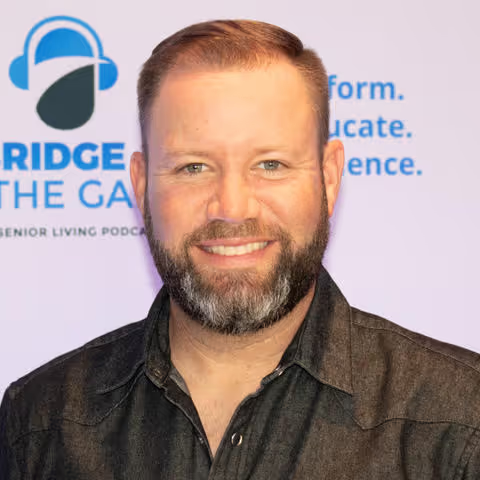
Lucas McCurdy is the founder of The Bridge Group Construction based in Dallas, Texas. Widely known as “The Senior Living Fan”.
Learn More ▶

This is a very friendly industry. I believe everyone's in it to do the best for their own company. But at the same time, we're sharing ideas.
This week on Bridge the Gap, Josh and Lucas sit down with Michael Bowden and Shae Portnoy of LTC REIT to explore how the company is redefining senior housing investment. Moving beyond the traditional “landlord” model, LTC is embracing a more collaborative, relationship-driven approach with operators The conversation dives into how LTC’s shift has transformed their company culture, opened doors to best-in-class operators, and created a more dynamic, people-first investment strategy.
Key Topics:
Meet the Hosts:
Connect with Our Guests
Produced by Grit and Gravel Marketing.
Become a sponsor of Bridge the Gap.







00:53 - 04:29
Lucas McCurdy
Bridge the gap in three two. Welcome to Bridge the Gap podcast the senior Living podcast with Josh and Lucas. A very exciting episode on today. We've got some great guests you want to welcome Michael Bowden and Shae Portnoy of LTC REIT. Welcome to the show.
Michael & Shae
Thank you very much. Glad to be here.
Lucas McCurdy
We are so glad to sit down and talk with both of you. We've had some great pre mic conversations. And you know, at LTC you'll have a term and it's done differently. Mike what does that even mean.
Michael Bowden
Well we focus on you know trying to differentiate ourselves outside of being capital right. Because that sometimes becomes this nebulous concept. And what does that really mean. So we think about, you know, getting down to a level of relationships, people okay. We focus on people. So we think that the stigma out there with capital is you're focused on numbers, you're focused on profit, you're focused on in a Y, you're not really focused on what's happening in terms of the boots on the ground, people on the ground, that take care of residents, that that take care of your asset.
So we have deliberately, and the term we use internally, have chosen to, curate relationships. Okay. Starting at the operator level. So we focus on that. We think that once you can, you know, really build that trust, focus on, you know, talking to people, listening to them, hearing what matters to them. To us, that is a differentiator. And that's why we try to focus on being different in that way,
Lucas McCurdy
you know, Shae in the industry. In the real estate umbrella, you hear the term landlord, right? And, you know, you hear that. But, when it's when we're talking about older adults and senior housing in the communities that they live in, what's your y'all's approach to the term landlord? Do you even think of it that way?
Shae Portnoy
Well, up until about a year ago, we did we were triple net lease rate, and we didn't have the opportunity to really participate in the operations and collaborate with our manager partners to, you know, have those outcomes for the residents. So starting last year when we opened up our shop portfolio and started growing as a company, we are now able to have more than just, hey, pay us rent as the relationship.
As Mike said, you know, it's more, you know, how are we creating positive outcomes for the residents? How are we not only driving profits but also driving resident family satisfaction?
Michael Bowden
And just to jump in, I mean, you think about the term landlord. To me, it means hands off, very hands off. Right. We're not involved. You don't know who that person is.
That's this thing out there. Those days are over, right? Because I think it's important, you know? What you going back to, right. And differently, you know, the landlord concept or whatever you want to call it, you know, walking buildings now with a purpose. You sit, you sit down with residents, you hear their stories. You know, I, I shared this example with you.
You know, in a recent deal, we did, a shot deal that we just did, you know, visited the assets earlier this year and they said, you know, we're going to take the approach, the written differently approach. We're going to spend the entire day with the heads, with the staff, with the residents. We're going to talk to them.
We're going to hear them out. What matters to you? So we had lunch with some residents, and next thing I know, I'm talking to a gentleman who was an Army sniper. I mean, very incredible. This an engineer, a teacher. And you start listening to these, these stories, the history of the residents that are living in your communities. If you can't get emotional and passionate about that, then you're in the wrong business.
04:29 - 07:57
Lucas McCurdy
That's so wonderful. I love those stories of, like, being on the ground, and I know Josh and I have shared these stories over the years. It's so funny. So I do. We do these renovation construction projects in the communities and all the engineers, all the contractors come out. And recently a guy was complaining that our screw pattern was off on our drywall.
And, he was right. That's awesome. I mean, it's fantastic, right? Yeah, he was absolutely right. But we have those stories and that makes such an impact. So this big change from triple net least to this, right, kind of shot program. How's that transition been like for y'all?
Shae Portnoy
Well, it's it's created a lot of energy in our company. So previously the business development team, you know, was, you know, siloed from asset management, siloed from accounting. And now we've been able to come together and collaborate both as a community and as, or as an internal company, but also with the relationships that we've made. We've had meetings upon meetings, upon meetings with all of these new people who are now interested.
And it makes sense for us to work together. So it's been a truly, watershed moment for our for our company to be able to start doing these new deals. And the program has been growing and we're we're busy. So it's a great thing. Yeah.
Lucas McCurdy
What are your thoughts on that?
Michael Bowden
No, it's it's been, our co-CEOs, Clint and Pam, Clint Malin and Pam Kessler have talked and use this word transformative. That that is very true. It's been transformative. So if you if you think back when we made the announcement at the end of 2024 publicly that we were going to transition to, you know, embracing, right, and shop, as a strategy, it really opened every door you could imagine. Okay. Because we were absolutely missing out on, you know, relationships with, with best in class operators with, you know, everybody that didn't want to get into the structure that we previously were offering.
Okay. So is it open to all these doors. And because of that, you know, going back again, I'm going to go back to the first point I made about relationships. It's opened all these doors. It's transformed the ability to curate and form relationships. Okay. Because if you take a step back and you think about, you know, capital and operator outside of doing all the standard things with documents and so forth, to me it boils down to one thing trust.
You have to trust each other, okay? And that's not something that happens overnight. It happens over time. So as you get to know each other, as you walk buildings together, as you share your stories, you start to realize, oh my gosh, the cultures are aligned, the personalities are aligned, we have common goals. We have common mission that forms the trust.
And then you go out there into this fantastic and crazy environment in terms of deals and and you, you go in and you go to battle together to win, you know, to win the day, to win the building or the portfolio, to really start that relationship. So it has been transformative. It's completely reshaped our portfolio, completely reshaped our mission.
You know, outside of growing just assets. We're growing. We're hiring new people, right. On the investment team, on the asset management team. So every every angle of LTC has changed for the better since we made that announcement.
Josh Crisp
Well, that's good stuff. So you answered part of the question I was going to ask. And that is it seems like often times, too often times in the past, regardless of the capital or the funding type mechanism, the real estate side of the business, there could easily be an unhealthy friction between that and the operator side.
07:57 - 10:49
Josh Crisp
So when you're looking at opportunities to get involved in what sort of the basic checklist that you're looking for, to make sure that that relationship is strong and consistent
Michael Bowden
In terms of between us and an operator?
Josh Crisp
That's correct.
Michael Bowden
Okay. Let's boil it down, people. Can we talk? Can we interact? Can we relate outside of just talking shop all the time, no pun intended.
Outside. Just talking business, getting to know each other. Okay. So again you have to form a level of like you do in any friendship or any relationship or any marriage or whatever form. You have to form that trust. You have to form that bond. So what are the cultures? I mean, one of the things again, I'll go back to our co-CEOs that that they have been really, really, hammering home to their credit, is creating a culture at LTC that is unmatched.
So the the operators that we're talking to, how do we align in terms of culture? How do we align in terms of strategic vision? What are their goals? How can we help them? Do we have similar goals. So you have all these conversations. Sometimes it takes months or even years, before you find an opportunity. But once you start really digging into that relationship side, the people side, when you find a deal you're that much more convicted about, this is the right group for this, particular deal.
Josh Crisp
Switching gears just a little bit. So at this next spring conference, probably in my 20 years in the industry, I've not heard this level of excitement. Last quarter, we we sat down with our partners at NIC MAP and, you know, the theme was recovery is over. We're we're sailing now in now in spring. Everybody's excited. From the data people to the finance people.
I'm wondering, what's your outlook as a REIT in 2026 for growth goals? Are are you strong into into this wind here. And are you going to ride that or what are what are growth goals for you all this year?
Michael Bowden
We are growing I mean, that is what we're doing. We're transforming our portfolio, to be predominantly seniors housing, predominantly shop. We are extremely bullish on the opportunity as a as our many. You have all the great things, the demographics and the lack of development, everything everyone talks about. So in general, we will continue to be very deliberate. We will continue to curate, okay, in terms of not only relationships but assets. And if you look at the definition, I think it's important to think about what that means, because we want to build a best in class shop portfolio that that will stand the test of time even when new development eventually comes in.
We're focusing on, okay, what are the assets that when that happens, they're protected because they're newer. They're they're well maintained. They're in great growth markets. And so forth. So so when you think about the word curate, it's very deliberate. It's very selective. It's not haphazard. So so we will continue to grow aggressively but also very smart in terms of what we're bringing out of the portfolio.
10:49 - 14:52
Michael Bowden
So ‘26, ‘27 and beyond LTC is at the table, no doubt. You know, trying to grow our portfolio.
Shae Portnoy
I was going to say we were being very disciplined with all the opportunities that are out there. You know, it's not so much, you know, throwing out a fishing line and hoping to catch something. It's now we can choose, you know, which ones we're going to reel in onto the boat.
And for us, we can partner with our, you know, managers who we formed those relationships with and create a strategy to acquire in a certain region or have a like, you know, a cluster of properties as opposed to just, you know, one in this area and then one in that area with a different manager. So we are being strategic, we're being disciplined, and it is exciting.
It's really, it's really fun. And I think that, you know, the energy that you can feel even on day one of NIC has been, has been really great.
Micahel Bowden
All the things that we do when we when we underwrite a new opportunity from the analytics to the data, to all that great stuff that we do just on the nuts and bolts of actually analysis, it's all we have a great process.
It's fantastic. What what what's the other side of that? It's who do you partner with? What operator is going to create the value. Because as we know in this, in this space the value is created from operations. Okay. So thinking about okay, how do we collaborate with our operator partners okay. It's a team. I mean you think about going into an opportunity.
We're working together. It's not it's not us dictating terms or dictating what things need to be. It's give us your input, tell us what you see. And a lot of times, obviously they're in the markets. So we value that. It's it's so huge. When you think about collaboration not only internally with LTC you know verticals. It's those operators are invaluable to us during the process as well. And we really take their input seriously
Shae Portnoy
During the underwriting process. We talk, a lot about how can we add on to the property in terms of value creation, how can we do capital projects that are going to bring in, you know, revenue that is profitable? So that's another thing that a lot of times as a landlord, you're trying to spend the least amount of money possible.
In this case, we're putting the dollars to work when it when it does have an ROI and outcomes for the residents where they're, you know, getting better quality care, I love that.
Josh Crisp
So going back to earlier point, I think you were making or something that you said was some you've had doors open up from some operators that maybe have been around for a while, but really didn't like the way the old model was set up.
So if you could just kind of simplify and boilerplate, like, what do you mean by that? Well, like what is when you say redone differently now when you're having those conversations where maybe it wasn't a workable solution before or situation? What what do you have it what's what's really changed?
Michael Bowden
So a lot of those relationships that I talked about, we've we've had them for probably a very long time. We just had no way to do business together. So now we do. And the structure, you know, the structure has allowed us to get there. But again, it's about the relationships that's bringing that is bringing it home. But the structure is about alignment of interest. It's about LTC and that operator, whoever they are being aligned going into a deal where as the community performs, as we do better as a as a REIT, they do better.
We share that alignment. And as you know, as a REIT, you know, we don't sell. We're not in the business of selling assets for in the business of acquiring high quality buildings and holding them forever. Right, in theory. And so how do we share in the upside that's created? Well, that's through our structure. That's very various incentives promote so forth and so on.
So as we do that, we share in that upside. And that's the alignment that's key in the structure that we have now.
Josh Crisp
Awesome, awesome. Well, Lucas, easy to see why you got so excited. The first conversation you came, you said we got to have these guys on the show.
Lucas McCurdy
That's right, that's right. And a great way to round out our conversation. Talk to us about LTC cares.
Michael Bowden
So that has yet to be, fully launched, but it is going to be coming later this year. So the goal here is and this goes back to passion. And I'm going to this is sort of something that I've been you know, really into especially going back to last year. It's how do we expose people at LTC that typically don't get out to the communities.
14:52 - 21:04
Michael Bowden
You know, you guys walk communities. It's easy to get emotional. It's easy to be connected. But if you're behind a desk and you're never really seeing buildings, you never talking to residents, you can get detached from what the heck you're doing. The goal here is to get employees that typically wouldn't get into buildings, into buildings, okay, walk them, see them, talk to residents, talk to EDs again, develop relationships, develop a connection.
And I think it's important because when you start to realize what it is that we're actually doing, like if you take a step back, okay, we're investing, we're creating, returns for our shareholders, investors. But at its core level, we're creating positive outcomes for the population that we really care about. Okay. Wellness outcomes. If you don't see that, if you don't walk it, if you don't understand it, I think it's hard to really get it.
So the goal here is let's get everyone in the building. So let's spend some time with with the operator, spend some time with the residents. And I think that's going to create even more, you know, buy in if you will. Company wide, relationship wide I think I think it's a great a great initiative. What's your perspective on it?
Shae Portnoy
I mean, to me, I have that the heart and soul with with that goes along with my job. So I'm a recovering investment banker. And back then you really were a cog in the wheel. They ran, you ran into the ground. And here the fact that our company reinvest back into our team members as well as into our operator partners, we break bread together, you know, having the ability for us to go and do service projects or sponsor, you know, the the Colorado peaches, it's a, you know, a retired, you know, senior living baseball team out in the Denver area.
It's something that, that can warm your heart while you're doing, you know, heavy duty finance and the analytics are, you know, the same, you know, it's it's deals and it's excitement on the finance side, but it's also, you know, at the end of the day, it's it's caring for the people that raised us or raised our parents.
And to me that, that that makes all the difference. I mean, connecting that heart and soul to what we're doing. It keeps everybody kind of looking at the right mission.
Michael Bowden
When when you walk into someone's unit, someone's apartment, someone's room, and you look at the walls and you look at the pictures and you look at the history and you see the awards, or you see that if you again, you look at that stuff.
Personally, I it's emotional and not a way where you break down crying, but you just say, I feel really good about what I'm doing because this is someone's mom, this is someone's grandmother, this is someone's father, and so forth. And you see the history on the wall, and you can really appreciate that. It's at the, at the, on the ground level, what the heck we're doing.
And I think that's important to keep that in mind because you can lose sight of that.
Josh Crisp
Oh, 100%. I think that's so, I think what you've just underscored is, a major difference in senior living versus really any other category of real estate. And it's like we really are impacting people's lives long term. And so the decisions we make at the highest level financially, we have to take that into consideration. It's a super it's an honor. And it's a big responsibility. Big responsibility.
Lucas McCurdy
It is. And it's a great opportunity. Actually, you know, we often end our conversations just around recruiting talent into the industry. You know, we'll start with Mike and then Shae. Obviously you have, you know, asset management, real estate, finances, backgrounds.
You can go into any vertical that you want with those skills. There's people that have, all different level of skills, but the fact is, is that they can bring those skills to the senior housing industry. So final words, speak to that person out there. That could be, any age, that are thinking, you know what?
I'd rather do something. I'd rather have a career that has some mission behind it. Obviously that resonates with you. What? You're. I mean, that's this, and I think it's important to understand that when.
Michael Bowden
So going just to the intellectual side of it all, the work that we do, everything that we, you know, model and underwrite, it's it's you get all of that whether you go into, you know, multifamily or office or whatever, whatever branch of real estate or sector you want to choose or whatever, that's all there.
But the other side is, is that you get something to me that is different in terms of this, this, this emotional connection. Okay. And, I've been talking to a lot of young college age kids who are doing real estate. And I say, how much do you talk about seniors housing in your classes? What do you think? Zero for the most part, zero. And then when you start to talk to them about the opportunity in the industry and all the things they their eyes light up like, I've never heard of this stuff, like it's it's incredible. I want to get them to be a part of it. So I think that for anyone out there that's looking for the electrical side, okay.
But also maybe a mission focused or an emotional connection, that really to me creates this longevity. To your point about being a sort of grind, you know, grinding it out. That's, that's this industry.
Shae Portnoy
I think this is a very friendly industry. I, I believe everyone's in it to do the best for their own company. But at the same time, we're sharing ideas.
We're talking about where this industry is going all together. And it's sort of like the rising tide raises all boats. And I think for, you know, younger people as well as older individuals who are looking for a sort of a reincarnation into their careers, it's an opportunity that, again, not many people know about. So seniors housing, it's not a sleepy one right there.
There's definitely a lot, a lot going on and a lot of opportunity for people who have want to be innovative, because there's a lot of room for innovation in our in our industry as well.
Lucas McCurdy
Every day is different. That's right. That's 100% right. Well great conversation, Michael Shea LTC, thank you so much.
Michael & Shae
Thanks for having us. Appreciate it.
Lucas MCCurdy
We're so happy to bring this content to you. And so if you want to learn about LTC and their team there, go down the show notes. Hit those links right there. Also going to btgvoice.com download this content and so much more. And thanks for listening to another great episode of Bridge the Gap.


