
Raj Mehra shares how Sage is building a caregiver-first culture and helping operators turn data into actionable insights. He explains why tech investments should focus on solving real challenges.
I think a lot of time operators are buying features, buying products because everyone else is, and that's not the right starting point.
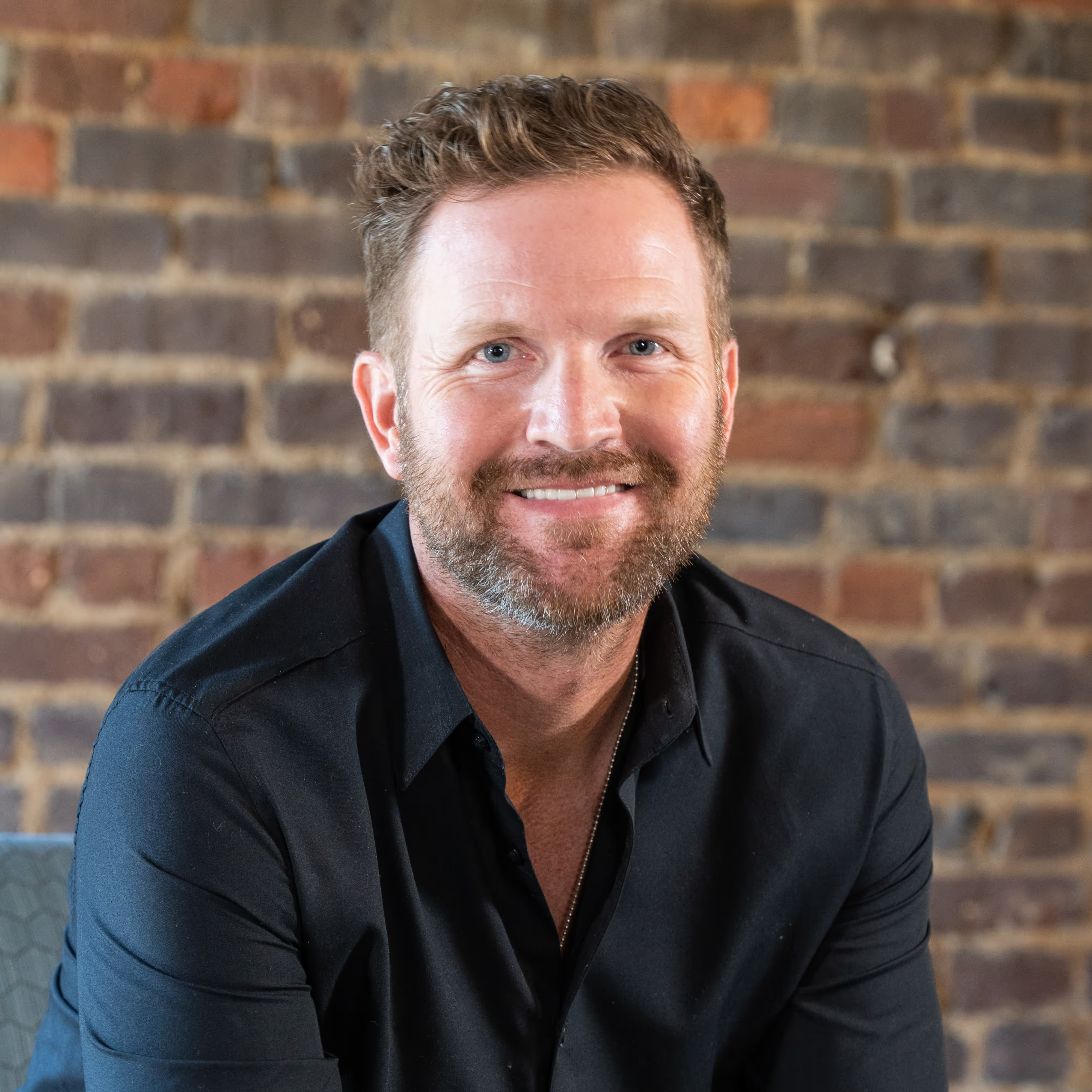
Josh Crisp is a senior living executive with more than 15 years of experience in development, construction, and management of senior living communities across the southeast.
Learn More ▶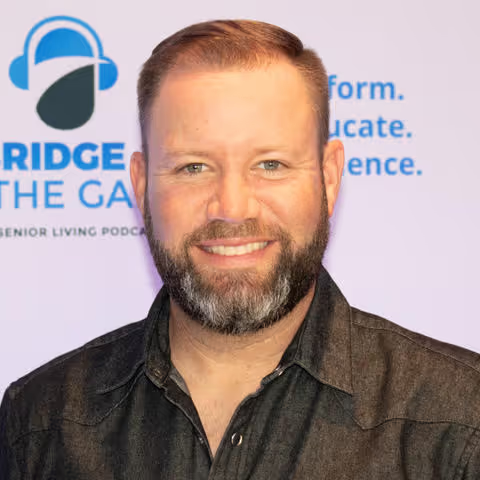
Lucas McCurdy is the founder of The Bridge Group Construction based in Dallas, Texas. Widely known as “The Senior Living Fan”.
Learn More ▶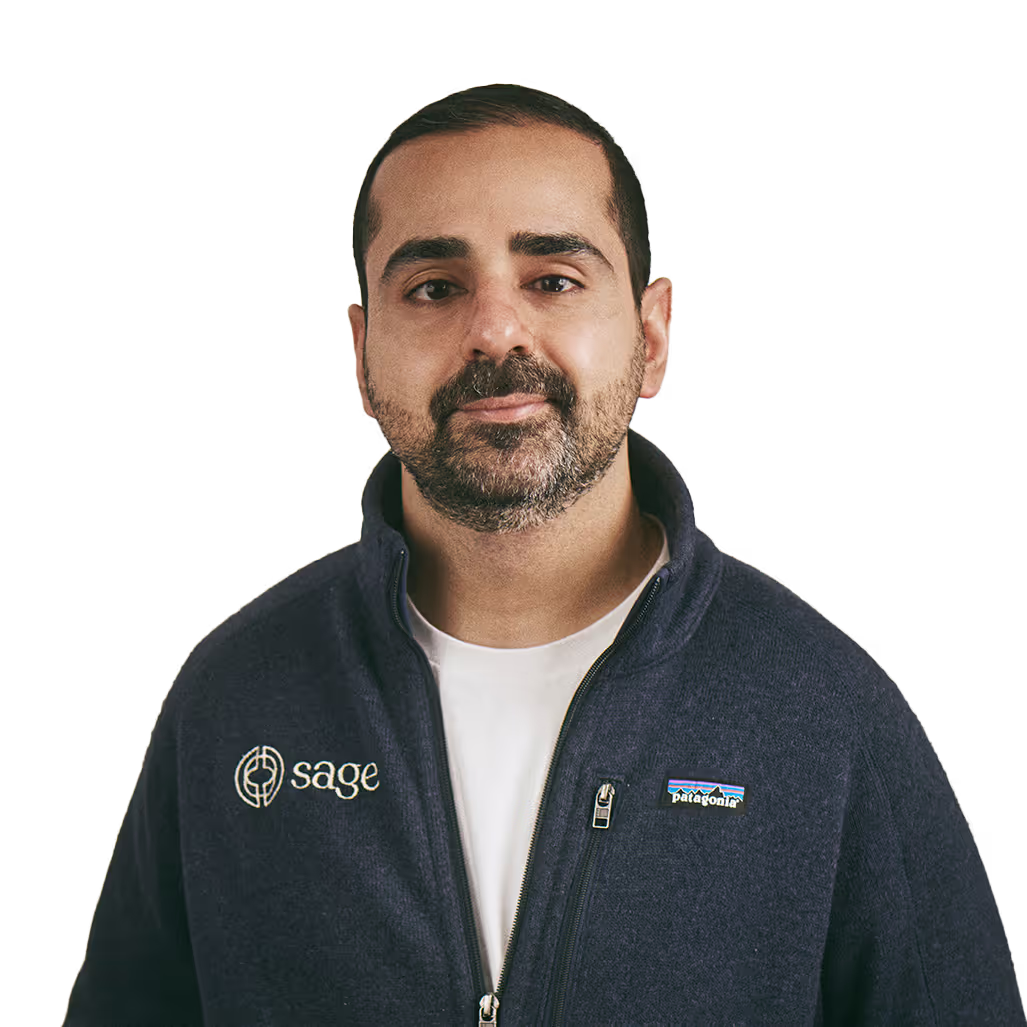
If you're fragmenting your team's workflows, you're burning them out.
As senior living operators face rising care needs and an increasing number of technology solutions, choosing the right tools is becoming more important than ever. In this episode of Bridge the Gap, Josh Crisp and Lucas McCurdy sit down with Raj Mehra, CEO and Co-Founder of Sage, during the NIC Fall Conference in Chicago.
Raj shares why putting caregivers first is central to Sage's mission and explains how connected data and AI can help operators improve staffing decisions, resident safety, and care outcomes. The conversation explores why technology investments should focus on solving specific problems rather than adding more features, the importance of turning data into actionable insights, and how innovations like Sage Wander are helping address some of senior living's biggest challenges.
Key Topics
Meet the Hosts:
Connect with Our Guest
Learn more about Sage
Produced by Grit and Gravel Marketing.
Become a sponsor of Bridge the Gap.








01:02 - 04:44
Lucas McCurdy
Bridge the Gap three two. Welcome to Bridge the Gap podcast, the senior Living podcast with Josh and Lucas. A beautiful day here down on the river level in Chicago. We have a great friend and a supporter. We've got Raj, the founder and CEO of Sage. Welcome to the show.
Raj Mehra
Thanks guys I appreciate it. Always love to be here.
Lucas McCurdy
Yes. Welcome back to the show. You know there's so many conversations happening here and we've loved interacting with your team and you and you know there's a lot of room for conversations around products and service and what makes you different and things like that. And I'm just going to interject my opinion here. Your origin story I find fascinating.
And it's always nice to know that there's a heart behind the service and the product. And you are definitely that. And your whole team really exemplifies how you have created that culture within Sage, where you are really putting the caregiver at the front, kind of the tip of the spear of of your why?
Raj Mehra
I think when we founded the company, each of us on the founding team had a distinct why of why we started the business. And then as we grew and now we're about 140, 150 people, everyone on the team to this day has a distinct why. And some come from industry. You know, if so many people who are caregivers, nurses, and leaders have joined us. We have other folks that had family experiences like me, that just really care about making the quality of care better in the society for older adults and helping the caregivers.
So everyone has a distinct. Why? Which makes us much more motivated than I think folks who might lack the why, honestly. And then, for us to really make the impact that we want to make, we have to focus on the caregiver. We've been saying this since the very beginning, six years ago, when we first started as a caregiver, is at the center of everything, and we just didn't want to say it.
We wanted to actually embody that. And one of the things we did just last month was that we created the first conference that was focused on the caregiver. It hasn't been done. I'm not sure why, but we brought 150 caregivers and frontline teams to New York across our operators, 40 of them represented, and they all were there for two days, spending time hearing for speakers and, frankly, being recognized for them, being the heartbeat of these communities.
And that was so special. The amount of gratitude we saw from that group of people, the amount of appreciation for being recognized and having a voice, having a forum, it was so rewarding to be able to do.
Josh Crisp
Wow, that's incredible. And, you know, kudos to you guys for making that investment. You know, putting it together, taking your team's time to do that. It's a huge time, a huge lift a great we actually have heard I've heard tons of great feedback.
Raj Mehra
Thank you so much.
Josh Crisp
So thank you for doing that. I'm wondering, you know, we're here at NIC. So much excitement. I've heard it's the largest NIC ever. So much optimism. Our industry is getting a lot of tailwinds with this demographic, which is also attracting a lot of new stuff, a lot of new technologies. There are new operators; there are new capital providers. Many of the operators are a little overwhelmed by all the technology that's at their fingertips now and choosing their partners at Sage. Where are you guys differentiating? Where's your focus? How are you different? What's your value proposition to an operator, and what kind of problems are you trying to solve?
04:44 - 09:21
Raj Mehra
You know, I think it's an opportunity area of real opportunity today. Like the amount of technology, the amount of excitement for technology is amazing. It's also confusing, right? I think for most operators. And it's been confusing for the last few years now. And the way I think about operators and their investment technology and owners now too, because they're part of the decision. More recently there became more involved, which is great, is what are you trying to solve?
I think a lot of time operators are buying features, buying products because everyone else is, and that's not the right starting point. It's like just because everyone's doing falls, I'm doing falls. Okay. That's one way to do it. My ask to them is are you solving a liability problem or you solving a lot of state problem? What are the things that are specific to you that you care about?
And let's start there and choose technologies that are going to work with you on the problems that will move the needle for you. Otherwise, I see a lot of operators doing is buying all kinds of things, not seeing the return and then wondering why that's a challenge.
So what are some of the most trending challenges you're hearing from? I mean, you guys talk to a ton of operators. Many of your operators I've talked to, they're all growing. They're having more communities, more people that they're managing more population. What are those emerging challenges that you're hearing as our industry starts transitioning to caring for this boomer generation? What are they concerned about?
Rak Mehra
So the things I'm hearing and there's there's some level of problems I'll give you kind of a sneak peek into one is how do I manage my labor better. Right. So a lot of our operators, 60% of their costs are in labor. But the challenge of labor is am I staffing appropriately? We'll have the right people on shift. Do I have the right clinical impact? And are people being taken care of and the way I expect? And that is a really hard layer to understand. And so what we're doing is we're using data.
We have these devices, we have different hardware's in these rooms, gives us a rich amount of data around what's the care Keynes needed. Is the queuing the building so high or you need more people. Do you have actually too many people on certain shifts? And is it because like your press are out of whack? What is the real time need relative to and acuity is changing on a weekly basis?
People move in, people move out, people get worse. And so that's one of the areas where we're like, hey, let's use data. Yes, let's use technology to help you in one. Operator, their goal for us in the past six months is keep my labor costs flat, while not compromising on quality. And if you do that well, you can make a significant impact to that operator.
And it's not like one to every building is not just using one lever. Some buildings are focused on turnover problem as part labor. Some buildings are focused on, you know, the staffing of each person. And if you have good performers and your good performers are getting burned out because you have bad performers on a shift, they're not doing their equal share.
So that's one example we see a lot right now is labor. The other is how do you use data that these systems give you to help predict move out? Right. Because we have operational views today on data around exactly what's happening to that person. Are they getting worse or better? Are certain health trends happening to them over night or over a week?
And if you intervene sooner with physical therapy regimens and others, you're then going to prevent that person from moving out.
Josh Crisp
So sage as a as a partner really for operators, are you finding that providing good data is enough for these operators? Or are there things that there's deficits at the operator level that our industry should be focused on, that you see from outside as a technology partner where, wow, the industry as a whole, now that you've got all this data, is there certain missing elements in the team or the operations or the protocol where you see as a provider? Man, if we could really bridge the gap between the data and how that data is actually being interpreted or used, enforced, whatever the term may be, are there gaps there that would be glaringly obvious to you as sort of the outside looking in as a provider?
09:21 - 16:08
Raj Mehra
So data is one piece, right? So if you're on systems are totally fragmented and you have different systems, you don't even have data, right. So you have to fix that problem first. Once you have that an outcome you want to solve, you need people on both sides. And so one of the things we do, I think particularly well is we don't just give you data, we take the data, we produce the insight with our teams. And using AI now makes it a lot easier that ladders up to the outcome topper wants us to solve.
So if per building, it's kind of like a checklist of things that we should be doing in that building to achieve the outcome, and then what we find is that if it's complicated. We need to embed resources side by side with the operator to help them. So for example, on the labor example I gave, we embedded a full time person at the operator to wanted to focus on labor alongside their teams.
Why? Because that person flew to every site. It made the data and insights that we're giving more accessible to them. It's sort of made it feel like, hey, actually, this feels overwhelming, but it's not. As they made it more digestible, they made them understand the value. Then it kind of produce results. If we had just shipped this dashboard through zoom and expected them to do it. It might have been overwhelming for them.
Josh Crisp
So pull back or take off the Sage hat for just a minute. I know that's difficult for you to do, but if you look at it, you know, it seems like with all the emerging technology for an operator, for an owner, whoever's making the technology partner decision, it's not as simple as it used to. Not only because you have so many emerging technologies, it just kind of makes your head spin sometimes. But it seems like used to, you know, you could put a technology provider sort of in a box of what it was they provided. It was very narrow, focused, and you could kind of compare apples to apples, and it was kind of a cost decision. It's like, okay, which ones the best cost of acquisition. Get them in here. Do what you do. It doesn't seem that simple anymore. As a technology resource, as a technology provider for the operators, what are some of the things that operators should be considering when choosing a technology partner? That's more than just the cost that you see on the deal sheet that comes across your desk.
Raj Mehra
Is it? And I'll be kind of blunt. Is it a widget? Is it a point solution? Is it do one thing, or can it help me with a number of things I don't think operators can afford? And I know they can because they tell me they can't. 5 or 6 solutions they have pick 1 or 2 across the system. Why? Because that's more affordable. A and B, you now are uniting the data and workflows.
If you're fragmenting your team's workflows, you're burning them out. And so we find is that operators, if they pick 1 or 2 best in class solutions. Maybe, you know, operational workflows for one and the HR for another. That's a good start because it makes the cost, and the less fragmented it is, the better it's going to be for your team.
Yeah. So I think that's a good starting point. And then you have to look at okay as new use cases come out as one day we have robots and buildings. Will these products scale to those use cases. I mean five years ago some of the products that were deploying now, like AI sensors in rooms didn't really exist that well, right.
What's gonna happen in the next five years? Are these systems going to scale or are you going to have to rebuild them? Yeah, and that's an expensive proposition if you have to rebuild it every time technology shifts.
Josh Crisp
Well, you know, Lucas, it's very encouraging to me. Sage has been a partner of ours. We've we've seen them since the early days grow hearing great feedback. As a matter of fact, my team uses Sage. I can proudly say that been a great partner. You've surrounded yourself with some industry veterans and people that have been very committed to the industry for years and years, so kudos to you, Raj, on the growth, the investment you guys have made during some transitional times for our industry. It's very exciting, Lucas, that you know, partners like Sage help bring this information to our listeners.
Lucas McCurdy
It is, it is. And it's been really cool to see, you know, Josh and you are entrepreneurs, y'all are incredible business entrepreneurs. You are. It's been really cool as we kind of ran out the conversation. I can't let you go without talking some business. Yeah, you've been and you've been on some really big podcasts. I've seen, you know, the interviews and you're, you know, you're up in Manhattan area, right?
I mean, you're at kind of this high level up there around other big tech companies, and you're raising money in different rounds. Can you tell us some of that story? Just, you know, kind of scratch my business. You know, mind there.
Raj Mehra
You know, when we first started, a lot of investors didn't want to invest in this area, frankly. Right. So in 2020, 2021, when we had this idea of like, hey, we want to help seniors, we want to work with facilities and communities across the country. Most of us are like, is that a big business? Is that something that, you know, we can we can invest in and make return? And my point to them is it a can make return, but be can is the right thing to do.
Right. And I think it's taken time in the last five years to educate those markets and those investors to say, no, this is not a cottage industry. It is the one of the larger industries that's having such significant tailwinds. And I think everyone's waking up to that, and they've been waking up for the last couple of years. So that's helped.
But it hasn't been that easy. Frankly, educating the investor market has been you know, it takes takes time. But I think now like our last round, our series was led by Goldman Sachs. And that to me was like very rewarding in many respects because you talk about one of the most dominant investors in the world is acknowledging that, okay, we're doing something, but they're more acknowledging that this industry is at the level where it needs to have the best technology.
And that, to me is really satisfying because caregivers, these teams are worked tirelessly. They should have the best technology. And that was really like an affirmation, I think, not just for we're doing what the market here is doing and then those rewarding.
Lucas McCurdy
Incredible.
Josh Crisp
Yeah. Congratulations on all the success. It's been fun to watch you guys grow, serve more and more people. And the teams that you've been serving for years just can continue to brag about you guys. So kudos. I know that's a lot of hard work. It's easy to to to say the mission, but it's difficult to do the mission. So congratulations to you guys.
16:08 - 17:48
Lucas McCurdy
All right Raj, final question. We're going to get you to your other meetings. And you can answer this however you want to. But I would say you know what's next. We're coming into the end of the year here in 2026. About turn the corner on 2027. Is it. You know just continuing to improve what you're already doing or is there is there something next.
Raj Mehra
Yeah. For us we've been heads down. Executing our roadmap is quite significant because operators when you do 1 or 2 things for them, they want like 5 or 6 things, right. And so one of the things that we're excited about right now is we're releasing a new product line. So we've sage core, we've Sage detect and now we're releasing Sage Wander. It's a water management product. So as you guys have experienced communities, if a person elopes and it wasn't found for a long time, that is one of the biggest liabilities and one of the biggest challenges for families.
And so we're deploying a product they use AI and sensing to basically detect where someone is as they're approaching it, exit door or their past exit door. And why we found that that was really important was that we want to make sure these buildings can, as a scale, they have record occupancies, they can keep everyone safe. If you have Alzheimer's, dementia, like we want to make a sustainable.
And so it's a new product line that we're releasing, releasing a lot of new product lines every every quarter. Frankly, I'm really excited for that one because it connects again to the mission.
Lucas McCurdy
Amazing, amazing. Well, we'll be watching that launch and rooting you on as as we see you guys grow. Thank you so much for your time today. We really appreciate it.
Raj Mehra
Thanks, guys. Always a pleasure.
Lucas McCurdy
All right. To our listeners. You can scroll down in the show notes and connect with sage and the team there. Go to beta and download this content and so much more. Thanks for listening to another great episode of Bridge the Gap.


